
Next Year in Futurism
.jpg)
“Science has not yet mastered prophecy,” Neil Armstrong (the first man on the moon) once said. “We predict too much for the next year and yet far too little for the next ten.” Indeed, some technologies exist in a tantalizing but perpetual “almost there”, always just a few years away. Consider the examples below, then discuss with your team: why are these technologies stuck in the near future, and which one would you be most excited to see in action?
fusion power
Fusion power has a reputation for being perpetually "30 years away". However, with advancement in the private sector, there might be change on the horizon. The main challenge with fusion power is that scientists would need to create a contain a plasms hotter than the sun's core with complex machinery that costs like a bigillion dollars. One of the milestones of this project is the International Thermonuclear Experimental Reaction, ITER, which is a fusion reactor based on the "tokamak" concept - a toroidal (doughnut shaped) magnetic configuration in which to create and maintain the conditions for controlled fusion reactions. The overall ITER plant comprises the tokamak, its auxiliaries, and supporting plant facilities. However the project has faced delays after delays.
The most significant shift is the rise of private fusion companies. Since the 2010s, they have injected over $10 billion into the field and are aiming for much more aggressive timelines. New materials such as large-scale superconducting magnets further confirm the progress. Advanced simulation capabilities have improved to allow scientists to model and understand the complex plasma behavior that was previously impossible to solve.
Future challenges include developing materials that can withstand the intense neutron radiation, manage the fuel cycle for the rare hydrogen isotope tritium, and efficiently convert the reactor's heat into electricity. While experimental facilities like the National Ignition Facility (NIF) (image on the right) have achieved "scientific breakeven" (the fusion reaction released more energy than the laser light that triggered it), this is still far from a commercial power plant. A practical power plant must produce electricity at a competitive cost. Major questions remain about scaling up and manufacturing these complex machines affordably.


cure for cancer
The "cure for cancer" has been going for more than a generation, and cancer isn't one disease. It is an extended battle that evolved into a war that continues to challenge the best minds in the world to find newer, better and more effective solution. "Cancer" is an umbrella for over 200 distinct diseases. Each type, and even subtypes within a single patient's tumor, can have unique genetic and molecular drivers. This means a "cure" for one may be completely ineffective for another. A major barrier is tumor heterogeneity. Cancers aren't uniform masses; they are diverse, evolving ecosystems of cells and sometimes a drug works and sometimes it is ineffective and resistant cells survive and leads to relapses. Also, for years, scientists have focused on the tumor itself and neglected the tumor microenvironment, including the cells, blood vessels, and connective tissues that support the tumor.
But, there is some rays of light at the end of the tunnel. For some notable cancers, like leukemia, lymphoma, and solid tumors there are effective treatments that leads to long-term remissions. Since 1991, mortality due to cancer has reduced by 33%. This is thanks to medical breakthroughs.
Breakthrough 1: Targeted therapies that attack specific genetic drivers of cancers.
Breakthrough 2: Immunotherapy treatments like Car-T cell therapy has reprogrammed the body's immune system.
Breakthrough 3: We are able to use these tactics on earlier stages of cancer.


graphene
graphene is a single layer of carbon atoms arranged in a two-dimensional (2D) honeycomb (hexagonal) lattice. Just like graphite (the stuff in your pencil lead) and diamonds, graphene is made entirely of carbon. It is the thinnest material possible—just one atom thick. 3 million layers of graphene stacked on top of each other would still only be 1 millimeter tall.
Why are they special? It is about 200 times stronger than steel by weight. An everyday analogy is that a single sheet of graphene (as thin as plastic wrap) is strong enough to support the weight of an adult cat without breaking. It conducts electricity far better than copper, making it one of the best electrical conductors known to science. Electrons zip across its surface with almost no resistance. It is an excellent conductor of heat, outperforming even diamond. Because it is only one atom thick, it is incredibly flexible and optically transparent, absorbing only about 2.3% of the light that hits it. In a lab, scientists first isolated pure graphene in 2004 using a famously low-tech method: they used Scotch tape to peel layers off a chunk of graphite until they were left with a single, atom-thick sheet. (They won the Nobel Prize in Physics for this in 2010).
Graphene is progressing and actively transitioning from a laboratory curiosity to a commercially viable material. Global production capacity has also soared, from about 14 tons in 2009 to nearly 23,000 tons by 2025. The market for graphene electronics alone is expected to reach $6.39 billion by 2030. High production costs have long been a barrier. But the economics are improving rapidly. Production costs have dropped from about $200/kg in 2020 to a projected $70-80/kg by 2028, with optimistic estimates approaching $20/kg.
Companies are producing graphene-enhanced batteries that charge rapidly and are highly durable. These are being adapted for electric vehicles, household energy storage, and grid systems. Graphene is also being used to improve anodes in utility-scale batteries. Aircraft manufacturers are embedding graphene nanoplatelets into carbon-fiber parts to achieve 15-20% structural weight reduction, improving fuel efficiency. Automakers are using graphene composites to reduce the mass of underbody shields by 12-15% while maintaining crash safety standards. Graphene microprocessors are being


developed. They can deliver more data at the same speeds as silicon chips while consuming about 80% less energy. A graphene-enriched concrete additive ("Concretene") can significantly increase strength while reducing the amount of cement required, achieving about a 30% reduction in CO₂ emissions for the same performance.
Not all graphene is created equal. Its performance varies significantly by layer count, flake size, defect density, and purity. There is an ongoing push to develop standards for characterization and quality control. While costs are falling, high-quality graphene products, like CVD-grown sheets, can still cost around $200-500/kg (compared to just $2-5 for carbon black). Additionally, the semiconductor industry has spent decades optimizing its production lines for silicon. Introducing a new material like graphene is expensive and disruptive, and it must justify the cost of adoption.
flying car
The progress and realistic model of flying cars is best described as electric Vertical Take-Off and Landing (eVTOL) aircraft. Unlike a car with fold-out wings, these are more like oversized, passenger-carrying drones. Near-term momentum is strongest in eVTOL air taxi services in select cities, not in personal ownership.
The market is seeing explosive growth projections, from $315 billion in 2025 to a potential $1.9 trillion by 2030, according to industry reports. Major corporations like Toyota, Delta, and United Airlines are investing hundreds of millions of dollars into companies like Joby and Archer. The U.S. Department of Transportation has approved pilot programs across 26 states for real-world testing. The technology is advancing rapidly. Electric propulsion is quieter, simpler, and more efficient than traditional aircraft engines. Designs are maturing, with companies like Alef Aeronautics having 3,500 pre-orders for its Model A flying car and XPeng unveiling a modular "Land Aircraft Carrier".
Yet, no company has yet received full FAA certification for commercial passenger service, and the process is taking longer than expected. The strict safety requirements make this a major hurdle. Current lithium-ion batteries are a major limitation, restricting range, payload, and operational efficiency. This makes long-range travel difficult, with most early deployments focused on short urban hops. Other challenges include adapting to low-altitude airspace rules and managing complex traffic patterns. Urban noise pollution and environmental impact remain concerns too.


virtual reality
Virtual reality (VR) has advanced significantly in hardware and software, but it has yet to become a mainstream consumer technology. Several interconnected factors keep it in the “near future” rather than the present day.
1. High cost and bulky hardware: Most VR headsets remain expensive, often requiring powerful PCs or consoles to run, and many are still heavy or uncomfortable.
2. Lack of a “killer app”: VR has struggled to find a single compelling application that convinces people they need it beyond niche gaming and training.
3. Limited compelling content: It lacks a broad ecosystem of engaging, practical applications.
4. Technical limitations: VR still faces issues like low-resolution visuals, motion sickness, and imperfect tracking.
5. Declining consumer interest: The initial hype has worn off since its launch in the early 2010s.
6. Market and adoption barriers: In many regions, especially underdeveloped economies, VR is just not feasible.
7. Industry focus on niche and professional markets: While VR is growing in sectors like training, healthcare, and design, these are not yet mass-market needs.
The most significant driver of change is the integration of Artificial Intelligence. Experts now point to AI as the missing piece that could finally unlock VR's mainstream potential. Also, hardware limitations are actively being tackled. For example, new eye-tracking systems using lensless cameras promise to be 5 to 10 times thinner and lighter, reducing bulk and enabling foveated rendering (putting only the area you're looking at in high resolution) for better performance. It's an industry that is seeing a shift and perhaps mass adoption.


nanotechnology
Nanotechnology is advancing rapidly as a foundational scientific field, but its transformation into a transformative, everyday technology is proceeding far more slowly than early hype once promised. It may look like nothing is happening commercially, but the market is still trending upwards with heavy investments and breakthroughs. Research at the nanoscale is producing solutions to some of the world's most pressing technological hurdles.
Rapid developments in nanomaterials (e.g., carbon nanotubes, quantum dots), nanomedicine (targeted drug delivery), and nanoelectronics are producing extraordinary innovations. Furthermore, applications are expanding into healthcare (cancer therapies, diagnostics), clean energy (nanoscale batteries, solar cells), and advanced manufacturing.
Quantum dots (QDs) are tiny semiconductor particles, typically a few nanometers in size, that exhibit unique properties due to quantum

mechanical effects. They are often referred to as "artificial atoms" because their behavior can resemble that of individual atoms, particularly in how they confine electrons and exhibit discrete energy levels. Quantum dots have a high quantum yield, meaning they can emit a significant amount of light when excited. This property is particularly useful in biological imaging and diagnostics, where bright signals are essential.
However, there are many challenges in developing nanotechnology. Many projects get stuck in the "Valley of Death" between lab and market. The patent environment for nanotechnology is a complicated and expensive "patent thicket" . The "interdisciplinary composition of nanomedicine" leads to overlapping claims that can inflate licensing costs by as much as 50% and delay market entry. Like many types of new technology, it suffers from a lack of globally harmonized definitions and safety guidelines. This regulatory fragmentation makes it difficult for companies to navigate the approval process, especially in sensitive areas like nanomedicine.
space elevator
Space elevators remain a highly ambitious but actively researched concept, with steady progress in theory and materials science, but still far from practical construction. In a state of stagnation, it remains blocked by fundamental material science limits and a severe challenge in securing the necessary financing.
The International Space Elevator Consortium (ISEC) and other groups are focusing on ultra-strong materials like carbon nanotubes to make the tether feasible. Recent ISEC 2025 papers explore applications such as low Earth orbit stations, lunar supply chains, and Lagrange point habitats. Reports from ISEC cover critical subsystems like the climber–tether interface, power delivery (laser/microwave beaming, solar, or conductive tethers), and debris mitigation. Multiple architectures are being studied, including “top-down” tether systems, and integration with advanced rockets for dual-space access.
Challenges include the material: The cable needs to be about 100,000 kilometers long and possess a tensile strength of roughly 100 gigapascals (GPa). For comparison, the strongest current materials only achieve a few GPa. While materials like carbon nanotubes and graphene have the theoretical strength needed, the longest carbon nanotubes produced so


far are only tens of centimeters long. Manufacturing them in the required, flawless, 100,000-kilometer length is currently impossible. Because building an Earth elevator is so difficult, significant interest has shifted toward Lunar Space Elevators. The Moon's lower gravity means that existing materials like Kevlar or Zylon could potentially be used. There is currently no single government or international consortium with the will to marshal the resources for such a mega-project. This is unlike the Apollo program or the International Space Station, which had clear national or political drivers.
food pills
The development of "food pills" as a staple for human nutrition is not a case of stagnation, but rather a story of evolution and niche application. The science-fiction dream of a single pill replacing all meals has not materialized. Instead, the concept has fragmented into several successful, high-growth real-world product categories: dietary supplements, meal replacements, and specialized medical nutrition.
Dietary supplement are very popular and over 70% of US adults report taking them. Meal replacements are also popular with people that care about weight loss and managing conditions such as type 2 diabetes. Some people also take them for specialized setting for specific diseases. However, pills can never replace a full meal and the dining experience. The downside is that pills are not only expensive, they’re simply unable to be fully absorbed in the way that regular food is. The exclusive consumption of pills leads to some pretty bad deficiencies. Additionally, the good ones are expensive, and they’re often only available to astronauts and those who can afford them.
artificial general intelligence
Artificial General Intelligence (AGI) research is not stagnant — it is accelerating, with measurable milestones, but still far from full realization. As of 2025–2026, AGI remains in the Narrow AI stage, where systems excel at specific tasks but lack the broad cognitive abilities of humans. AI still requires millions of simulated experiences to match human learning speed. Models struggle with strict cause-effect understanding, limiting safe manipulation of novel environments. Scaling compute to hypothesized AGI parameters faces thermodynamic limits.


However, industry leaders and researchers are increasingly confident in AGI timelines. Google DeepMind and OpenAI suggest AGI could emerge by 2030, with many experts predicting between 2027 and 2032. A major leap forward is the development of "world models" like Google's Gemini Omni. These AI systems don't just process text or generate static images; they can simulate how reality works, understanding concepts like physics, spatial relationships, and fluid dynamics. Research has operationalized AGI using human cognition frameworks (CHC theory), showing GPT‑4 at ~27% and GPT‑5 at ~57% of human-level performance, still short of full generalization.
With apologies to Mr. Armstrong, sometimes people also predict too much for the next ten. Consider these predictions for the year 2028, made in 2018. Are there any that haven’t come true yet but that you think still might in the next two years?
Bill Gates wrote in 1996 that “We always overestimate the change that will occur in the next two years and underestimate the change that will occur in the next ten. Don’t let yourself be lulled into inaction.” While this was certainly true at the time, the nature of exponential trends means that these changes are speeding up — in other words, the next ten years are going to be even more dramatic than the last ten.
2008 was the year that the iPhone had just been launched and we suddenly moved from WAP to the mobile web, from a mobile with a keyboard to a touchscreen. Apps, which so dominate today’s mobile user experience were launched in 2008 too, Facebook and Twitter were just going global and Kindle and Android were being released. AirBnB, GitHub and Spotify all launched too, fundamentally changing whole industries.

These are the predictions for the next 10 years by Kindred Capital:
1. There will be a new form factor to replace mobile. The dominance of the touch screen mobile seems to be strong yet, as Moore’s Law relentlessly increases computer power and speed, it’s likely that a breakthrough in the touch screen form factor. My bet would be on some kind of retinal display with voice and gesture being the main way of navigation. But if that doesn't happen, according to Moore’s Law continues, today’s mobile could be 4 million times more powerful and the size of the full stop at the end of this sentence.
2. 50% of cars driving miles in the UK and US will be autonomous. This might seem quick, but once AV’s are deployed and the safety records of human v AV can be directly compared, insurance pricing for those humans who insist on taking control — and crashing — will sky-rocket. Economics and the opportunity to save 1.3 million lives every year will make too compelling an adoption case.
3. Freelancers account for 75% of jobs. McKinsey announced earlier this year that by 2020, 40% of the workforce will be “Ultra- Flexible” and this is a trend that’s accelerating. Our bet is that 75%of the workforce will be in this position by 2028, which is going to make for interesting times for parents with children starting work this decade.
4. Nine generations alive simultaneously. If this seems like a stretch, just consider that the seven generation mark was already passed in 1989. Radical improvements in lifespan, driven by healthcare, make getting to the ninth one highly likely. humanity is around 10 years away from reaching “escape velocity”- the point at which, for every year that you’re alive, science is able to extend your life for more than a year. This means that having nine generations alive might be increasing normal.
5. In the US, armed security drones outnumber human guards. Even if the drones aren’t permitted to make fire/kill decisions, which brings up a whole range of ethical and liability issues, this is another area where we can expect the machines to take human jobs.
6. Veggies Go Mainstream. This seems to be a major trend that’s going to grow fast from here on out. Viable alternatives to meat developed by technology means there’s very little to give up for most consumers. On the other, the growing awareness that mass factory farming is an environmental crime (estimated to account for 30% of global warming), as well as being immensely cruel, polluting in many other ways, inefficient and actually, bad for our health. In a developed country like the UK, I’d estimate that as many as 30% of the population will be meat-free by 2028. If that seems high, consider that veganism is growing in meat-loving USA by 600% year-on-year and 6% of the population self-identify as vegan.
7. The End of Cash. The major trend here is decreasing use of cash (and in parallel, the rise and rise of cryptocurrencies).
Estonia is likely to be the first cashless country, but some of the Nordics will follow quickly. In the UK, cash will be less than 1% of all purchases by 2028. China may well lead the pack here, with major payment platforms like AliPay and WeChat increasingly taking over day-to-day purchases.
8. Solar takes the lead. Solar may not be the leading energy source globally by 2028, but it will in key countries who actively commit to it. In Germany solar already accounts for nearly 7% of energy generation, with around 25% coming from renewable sources in total. In the UK, 2017 saw the first day when solar generated more power than all 8 of the nuclear power stations in use.
9. Bladerunner beats Purists. By the 2028 Olympics in LA, the fastest humans will be those using artificial limbs. Amputating legs to run at 50 MPH, as an example — Usain Bolt managed 28 MPH at his fastest.
10. Virtual Reality addiction. By 2028, 10% of consumers in developed economies will be addicted to VR, which I will define as spending 8 hours per day (or more) fully immersed. Being able to live in a parallel universe, which you can perfectly control, combined with significant job losses driven by technology will start to make this a major problem.
In no particular order, here are some that didn’t make the cut
· Emergence of personal pharma drugs
· First person killed in war by a machine decision
· Language learning no longer mainstream subject
· TVs no longer sold
· Broadcast TV channels abandoned, apart from sports
“It will soon be possible to transmit wireless messages all over the world so simply that any individual can own and operate his own apparatus,” the inventor Nikola Tesla told the New York Times in 1904. Whether it was an accurate prediction of the smartphone depends on what you think the meaning of “soon” is. For Tesla, soon meant, “I’m building it right now; I just need more funding.” Read more about his Wardenclyffe Tower and the reasons it failed, then discuss with your team: what if it had succeeded?
By 1900, Tesla was already widely regarded as America’s foremost electrical engineer, having dazzled the world with his groundbreaking inventions and his triumph over Thomas Edison in the “battle of currents.” It was then that he embarked on his most ambitious project to date: the transmission tower at Wardenclyffe. Constructed during the period of 1901-05, the Wardenclyffe facility was based on another of Tesla’s revolutionary ideas. The tower would be the prototype for a system that could broadcast music, news, stock market reports, secured military communications, even facsimile images around the world, using the Earth itself as a conductor. It was an incredibly prescient attempt to create a telecommunications infrastructure similar to what the Internet offers us today—but completely wireless.
He had already proved that high-frequency signals could be transmitted without wired connections using his own “Tesla coil” transformers, and this led to what would become a lifelong obsession: the wireless transmission of energy. Tesla saw that the world around us is
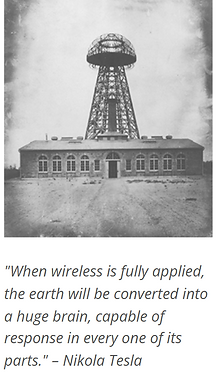
brimming with “free” energy, and was adamant about finding a way to harness it for the betterment of humanity. Secret experiments Tesla conducted at his Colorado Springs laboratory in 1899 had convinced him that it would be possible to transmit electrical power through the Earth’s upper atmosphere.
Unfortunately, Tesla’s grand vision for Wardenclyffe exceeded his resources and his patrons’ patience. The project ran into financial difficulties before it was completed, and in 1917 the unfinished tower was finally demolished for scrap to satisfy Tesla’s debts.
The original red brick laboratory building still stands, and is the only surviving Tesla lab today. In 2017, a film crew successfully used ground-penetrating radar to confirm the existence of a series of long-rumored tunnels stretching for hundreds of feet underneath the Wardenclyffe facility. The original purpose of these tunnels remains a mystery to this day. Today, the site remains a landmark and a pilgrimage destination for Tesla enthusiasts around the world. A grassroots campaign succeeded in saving the site in 2013, and the property is now owned by the Tesla Science Center at Wardenclyffe, a non-profit organization established to restore the site and ultimately develop a science and technology center and museum on the grounds.
· Competitive gaming becomes an Olympic sport
· First country implements digital direct democracy
· Wireless charging is normal
· First fully automated construction projects completed
Tesla is far from the only person to have declared that “it will soon be possible…” Sentences that begin with this and similar phrases (e.g., “In a few years, everyone will…”) almost always make ambitious predictions about the near future. Search online for examples like them, then discuss with your team: for each one, are we there yet, and how long did it take us to get there? If not, how close are we? Here are three examples to get you started.
“…for one man to be heard by every human being on Earth” (1925)
"It would seem to be only a question of time before it becomes possible for one man, speaking in one place, to be heard by every human being on Earth." This quote is from Guglielmo Marconi, the Italian inventor and radio pioneer. He said it in a speech delivered on September 20, 1925, at the banquet held in his honor by the American Institute of Electrical Engineers (AIEE) in New York City. Marconi made this statement in the context of predicting the future of global radio communication. At the time, shortwave radio was beginning

to demonstrate its ability to send signals across vast distances (earlier that year, Marconi had successfully transmitted signals from England to Australia). In his speech, he was envisioning a world where radio technology would become so powerful and ubiquitous that it would no longer be limited by geography.
Marconi's prediction came true much faster than anyone expected. Just two years later, in 1927, Charles Lindbergh's transatlantic flight was covered by live radio broadcasts heard by millions. And by the 1930s, it was entirely possible for a single voice (like that of President Franklin D. Roosevelt or Adolf Hitler) to be heard by a significant portion of the world's population—exactly as Marconi had envisioned.
-
To inspire engineers: He was speaking to a room full of electrical engineers, and he wanted to paint a grand, ambitious vision of what their collective work could achieve. He was challenging them to see radio not just as a point-to-point telegraphic tool (like Morse code), but as a universal broadcast medium.
-
To predict global broadcasting: Just two years earlier, the first commercially licensed radio stations had begun regular broadcasting in the US and the UK. Marconi was foreshadowing the era of worldwide news, entertainment, and propaganda—a world where a single political leader, entertainer, or broadcaster could address the entire planet simultaneously.
-
To assert his own legacy: Marconi was famously defensive about his patents and his role in radio's invention. By making this grand prediction, he was subtly reinforcing that he was the man who started it all, and that the technology he pioneered would one day unite—or transform—all of humanity.
The quote “…to launch a satellite that makes its own solar array in orbit” refers to the concept behind Made In Space’s Archinaut One mission, and the person most directly associated with this idea in 2019 is Andrew Rush, the President and CEO of Made In Space, specifically tied to a $73.7 million NASA contract for this in-space manufacturing demonstration.
“…to launch a satellite that makes its own solar array in orbit” (2019)

Rush described the NASA contract as a "watershed moment" and highlighted that the mission would "prove the efficacy of this technology, reduce the risk posture, and manifest new opportunities for in space manufacturing". In interviews and NASA announcements, he emphasized that Archinaut One would manufacture its own solar arrays in orbit, rather than launching pre‑built, folded panels. Solar arrays normally must be folded to survive launch. Building them in orbit allows much larger structures. The Archinaut One mission was designed to change that by using a robotic system to 3D-print the support structure for two massive 10-meter solar arrays in orbit. Success would mean that small, relatively inexpensive satellites (ESPA-class) could have five times more power than before, enabling them to host powerful sensors and instruments that previously required much larger and more expensive platforms.
“…for humans to live a thousand years or more” (2025)
The phrase “…for humans to live a thousand years or more” in 2025 is most directly associated with Dr. Aubrey de Grey, the biogerontologist known for predicting extremely long human lifespans. His 2025 interviews and publications explicitly discuss the possibility that the first person to live 1,000 years may already be alive today. Additionally, Zoltan Istvan, a prominent transhumanist advocate, is a strong proponent of "Longevity Escape Velocity"—the point at which medical advances extend life faster than time takes it away. In 2025, he reiterated his belief that science could soon make aging optional. Furthermore, tech billionaire and biohacker Bryan Johnson, who is the subject of a 2025 Netflix documentary about his quest to live forever, also discussed the possibility of extending lifespans to "1,000 years, 10,000 years. Millions of years".


The phrase “…for humans to live a thousand years or more” in
The core scientific argument is that we are on the cusp of "curing" aging. Researchers like de Magalhães argue that by focusing on cellular reprogramming and DNA repair, we can treat aging as a disease rather than an inevitability. Conversely, the debate in 2025 also focused on the implications of radical life extension. Some experts warn that such longevity technologies could create a new form of inequality, becoming a privilege for the wealthy and powerful, and would require a complete rethinking of society, work, and resources.

Two humans that want to live a thousand years are the presidents of China and Russia. In September 2025, they were overheard talking about using organ transplants to extend their lives indefinitely. As a strategy, organ transplants have major shortcomings: it can be hard to find the organs, and just as hard to stop our immune systems from rejecting them. But people have invested billions of dollars in developing other approaches. Learn more about those listed below, then discuss with your team: if science does find ways for us to live much longer lives, would there be any reason to hesitate before using them?
Is it possible to become immortal with the help of organ transplants? That was the unexpected topic of discussion March 2026 between Chinese President Xi Jinping and Russian President Vladimir Putin when they met at a military parade in Beijing. A translator, speaking in Mandarin on behalf of Putin, told Xi how human organs can be repeatedly transplanted "so that one can get younger and younger" in spite of age, and might even be able to stave off old age "indefinitely".
"It's predicted that in this century it might become possible to live to 150," he added. Their smiles and laughter suggest it was a bit of banter, but might they be on to something? Transplants have been going on for a long time to extend longevity. Organ transplants certainly save lives - in the UK, over 100,000 people have been saved in the last 30 years, says NHS Blood and Transplant. Some patients have had a kidney transplant that has kept working for more than 50 years.
Not all organs last the same amount of time. For example, if you were to have a new kidney from a living donor, you might expect it to last 20 to 25 years. If you get it from a deceased donor, that drops to 15 to 20 years. The type of organ matters too. A liver


Organ transplants for immortality: Might Xi and Putin be onto something?

might last around 20 years, a heart 15 years and lungs nearly 10 years. However, it's not all positives. Currently, people who get a new organ also have to take strong anti-rejection drugs called immunosuppressants for life. These can have side-effects, such as high blood pressure, and increase the risk of infections.
One scientific field of advancement is xenotrans-plantation - the transplanting of living cells, tissues or organs from one species to another. Scientists are working on making rejection-free organs, using genetically altered pigs as the donors. They use a gene editing tool known as crispr to remove some of the pig genes and add certain human genes to make the organ more compatible. Breeding special pigs for this is ideal, say experts, since their organs are roughly the right size for people.
Another avenue being explored is growing brand new organs using our own human cells using stem cells, which has the ability to grow into any type of cell or tissue found in the body. No major breakthrough yet, but in December 2020, UK researchers UCL and the Francis Crick Institute rebuilt a human thymus - an essential organ in the immune system - using human stem cells and a bioengineered scaffold. When transplanted into mice as a test, it appeared to work.
Beyond organ transplantation, approaches like plasma replacement are being explored, but these remain experimental. Bryan Johnson was getting plasma transfusions from his 17-year-old son, but has since stopped to avoid problems with the FDA.


Some scientists believe that 125 years old is the maximum limit for human life. The oldest verified person is a French woman who lived until 122. While damaged and diseased organs may be replaceable by transplants, as we age our bodies become much less resilient or able to cope with physical stressors. "We begin to respond less effectively to infections, and our bodies become more frail, prone to injury and are less able to recover and repair," said Prof Neil Mabbott, an expert in immunopathology at the Roslin Institute, University of Edinburgh. "The stress, trauma and impact of transplant surgery, alongside the continued use of immunosuppressive drugs required to prevent rejection of the transplanted organs would be too severe in patients of such advanced age."


Organoids
Organoids are three-dimensional, self-organizing cell cultures grown in a laboratory. These structures, often called “mini-organs,” are derived from stem cells and replicate the structure and function of a specific organ on a miniature scale. They are already being actively used in research and early clinical tests, but still several years away from being a standard clinical tool. Unlike traditional flat (2D) cell cultures, organoids are complex 3D structures that grow in a special gel that mimics the body's environment. They are also not fully functional organs or a "brain in a dish," as some headlines might suggest. They are created from stem cells (adult stem cells from tissues, or induced pluripotent stem cells (iPSCs) derived from skin or blood cells) and are guided to develop in a lab by using special chemical signals.
Researchers use organoids to study diseases like cancer, Alzheimer's, and Zika virus in a controlled, human-relevant way. They are also being used to screen thousands of drugs for efficacy and safety, potentially replacing some animal testing. By creating "tumoroids" (tumor organoids) from a patient's own cancer cells, doctors can test different chemotherapy drugs directly on the organoid to see which one is most effective for that specific patient. This is already happening in clinical trials. This is the closest to becoming a reality, estimated about 1-3 years for personalized cancer treatment. As techniques improve to grow organoids faster and more reliably, using them to guide cancer therapy will likely become more common in major medical centers.
Some challenges include organoids lacking blood vessels (vasculature). This limits their size and function because the cells inside can't get enough nutrients and oxygen. Most organoids don't include immune cells. This is a huge limitation because the immune system plays a vital role in health and how cancers respond to therapy. Organoids often mimic fetal or early developmental stages rather than mature adult tissues. They also struggle to recreate the full complexity of cell types and interactions found in a real organ.
bioprinting
bioprinting extends traditional 3D printing into the realm of biology. The process creates complex 3D structures by printing "bio-ink," which is a material composed of living cells, growth factors, and a supportive gel-like substance. While it has already achieved significant successes in research and is used for some clinical implants, creating complex, fully functional organs for transplantation remains a long-term goal, likely 10 to 15+ years away due to immense biological and engineering challenges.


Key steps in the process include:
-
Pre-Bioprinting: Creating a digital blueprint of the tissue from medical scans.
-
Bioprinting: Depositing the bio-ink layer-by-layer using different techniques like extrusion (the most common, suitable for high-viscosity materials) or inkjet (faster, with finer resolution).
-
Post-Bioprinting: Maturing the printed construct in a bioreactor to allow the cells to develop and the tissue to gain strength.
Bioprinting is currently used to create tissues like skin, cartilage, and bone. It is also a powerful tool for drug testing and disease modeling, providing more accurate, human-relevant alternatives to animal testing. In 2022, a major milestone was reached when a bioprinted human ear made of living cartilage cells was successfully transplanted into a patient.
Expect wider adoption of simple, avascular tissues like skin grafts for burn victims and cartilage for joint repair. The primary hurdles that prevent printing complex organs like hearts, livers, and kidneys are substantial but progress is promising.
-
Vascularization: The inability to print a functional network of fine blood vessels to supply nutrients and oxygen to thick tissues is a major bottleneck.
-
Resolution: Current printers often lack the microscopic precision needed to replicate the intricate architecture of native tissues.
-
Scalability: It is difficult to print large, centimeter-scale tissues without the inner cells dying from lack of oxygen.
-
Longevity and Function: Even if printed, the tissues often don't survive or function for long periods inside the body.
plasma transfusion
Short answer: Plasma transfusions — especially “young plasma” marketed for longevity — do not extend life, and they carry real medical risks, no proven anti‑aging benefit, and explicit FDA warnings. Research on “young blood” comes mostly from mouse parabiosis experiments, where young and old animals share circulation. While older mice showed some rejuvenation, no single “youth factor” has been identified, and human trials have shown no cognitive or functional improvement.
Several observational studies on already-ill patients have linked plasma transfusions to an increased risk of short- or long-term mortality in specific contexts. For example, one study of nearly 85,000 patients found that transfusion of fresh frozen plasma was associated with a higher 14-day mortality risk (relative risk ~1.19). When therapeutic plasma exchange is used for anti-aging, it poses additional problems. While removing potentially harmful factors, it also filters out protective proteins that are important for nerve and vascular health. Even under proper protocols, patients face risks including allergic reactions, infections, thrombosis (blood clots), and immune system disturbances.
Commercial clinics have begun marketing expensive plasma exchange programs under concepts like "blood rejuvenation," often making exaggerated claims. This blurs the line between therapeutic plasma exchange (used for specific severe diseases) and its anti-aging application, which constitutes off-label misuse.


senotherapeutics
Senotherapeutics are treatments designed to target, remove, or modify senescent cells — the dysfunctional “zombie cells” that accumulate with age and drive inflammation, tissue damage, and age‑related diseases. They are one of the most active areas in longevity science today. These cells have stopped dividing due to stress or DNA damage. Instead of dying, they release a toxic mix of inflammatory signals known as the Senescence-Associated Secretory Phenotype (SASP). The SASP can cause chronic inflammation, contribute to age-related diseases like Alzheimer's, cardiovascular disease, and cancer, and even accelerate aging in nearby healthy cells.


Senolytics are drugs designed to selectively kill senescent cells without harming healthy ones. They do this by disabling the "anti-death" pathways that senescent cells rely on to survive. Rather than killing the cells, senomorphics (or senostatics) drugs aim to suppress the harmful SASP. They stop senescent cells from secreting inflammatory factors without eliminating the cells themselves.
In humans, early trials show improved mobility and reduced inflammation, but no confirmed lifespan extension yet. Most breakthroughs have been in animal models (like mice). While human clinical trials are underway, the evidence of long-term safety and efficacy for extending human lifespan is currently insufficient. More robust clinical trials are needed. Also, senescent cells are not purely “bad”. They play essential roles in wound healing, tumor suppression, and embryonic development.
cellular reprogramming
Cellular reprogramming is one of the most powerful — and most controversial — longevity technologies being explored today. It aims to reverse aging inside cells by resetting them to a more youthful state. It is scientifically thrilling, but it also carries serious risks.
Cellular reprogramming uses specific genes (called Yamanaka factors) to reset an adult cell back toward a youthful, stem‑cell‑like


state. The four classic factors are Oct4, Sox2, Klf4, c‑Myc — often abbreviated OSKM. When applied carefully, they reverse epigenetic aging, restore youthful gene expression, and improve cell function.
This is the same technology used to create induced pluripotent stem cells (iPSCs), but in longevity research, the goal is partial reprogramming — rejuvenating cells without turning them fully into stem cells.
No human anti-aging reprogramming therapy is approved yet and companies are working on organ regeneration, age-related disease treatment, cellular rejuvenation therapies. This is the most critical concern. If reprogramming goes beyond the "partial" stage, cells may transform into tumor cells or form teratomas. Even if overall success is achieved, some cells might respond differently and become cancerous. Delivering reprogramming factors precisely to target tissues or organs (e.g., the brain, heart, or pancreas) without affecting other areas is a major technical bottleneck. Viral vectors may cause immune reactions or integrate into the genome unpredictably. The long-term consequences of repeatedly "resetting" a cell's biological clock are entirely unknown. Could it increase the risk of other diseases decades later? No one can yet answer this.
cellular rejuvenation
Cellular rejuvenation is a revolutionary concept in aging research that aims to reverse the aging process at the cellular level, restoring old cells to a more youthful state. There are several ways being experimented to achieve this:
-
Epigenetic resetting — Reversing age-related changes in DNA methylation and gene expression.
-
Mitochondrial restoration — Improving energy production and reducing oxidative stress.
-
Protein homeostasis — Enhancing autophagy and proteasome activity to clear damaged proteins.
-
Cellular reprogramming — Using Yamanaka factors (OSKM) to partially reset cells to a youthful state.
-
Metabolic interventions — Compounds like NAD+ boosters (NR, NMN) or rapamycin that restore youthful metabolic signaling.
Some risks include reprogramming or rejuvenation can trigger uncontrolled cell growth and resetting cells too far may erase tumor-suppressive mechanisms. Over-rejuvenation may cause cells to lose their specialized function (e.g., a neuron no longer behaving like a neuron). The "therapeutic window"—the precise dose and duration that rejuvenates without causing harm—is still being defined.
telomere extension
Telomeres are repetitive DNA sequences that act like protective caps at the ends of chromosomes. Each time a cell divides, these telomeres shorten. When they become critically short, the cell stops dividing and enters a state called senescence, which is linked to aging and age-related diseases. Telomere extension aims to counteract this shortening by using the enzyme telomerase. In most adult cells, the telomerase gene is turned off, but it can be reactivated to add DNA sequences back onto the telomeres, effectively resetting the cell's "aging clock".

Compounds like the supplement TA-65 (derived from the astragalus plant) or the synthetic molecule TAC are being studied for their ability to reawaken the telomerase gene. A 2025 meta-analysis found that TA-65 can moderately lengthen telomeres, but industry-funded studies reported more significant effects. TAC has shown promising results in mice, improving cognition and physical function without observed tumors.
Cancer cells are "immortal" because they have found ways to maintain their telomeres, allowing them to divide endlessly. Telomerase is activated in about 90% of all human cancers. Extending telomeres in healthy cells could theoretically push them along this path to malignancy.
caloric restriction
Caloric restriction (CR) is one of the most studied longevity interventions. It refers to reducing daily calorie intake — typically by 20–40% — without causing malnutrition. The idea is that eating fewer calories triggers biological pathways that slow aging and extend lifespan. CR promotes a shift in cellular energy use, moving from glucose dependence toward fatty acid metabolism. This metabolic flexibility is linked to various longevity pathways. CR reduces the activity of key nutrient-sensing pathways, such as insulin/IGF-1 signaling (IIS) and mTORC1. Inhibiting these pathways is an evolutionarily conserved mechanism for lifespan extension, promoting cellular maintenance and stress resistance.
To preserve survival during reduced calorie intake, the body prioritizes vital functions and suppresses energy-demanding processes. This can lead to a range of negative effects, including:
-
Delayed wound healing.
-
Increased hunger and cold sensitivity.
-
Potential decline in bone mineral density.
-
potential mental health related issues.

digital immortality
Facing death, the best solution is upload! Digital immortality is the idea that a person’s identity, memories, and personality could be preserved and continue to exist in digital form — even after biological death. It’s not about extending the body’s lifespan, but about creating a digital continuation of the self. It explores how we can leverage artificial intelligence (AI), big data, and other technologies to create a digital replica or "digital twin" of a person after their death, using their digital footprint—such as chat logs, photos, videos, and voice recordings. Currently, this concept exists largely in theory and science fiction.
The system collects extensive data from the target individual's life, including social media posts, emails, photos, videos, voice clips, and even more nuanced personal characteristics. Large Language Models (LLMs) are used to analyze this data, learning the person's linguistic style, thinking patterns, opinions, and personality traits. Simultaneously, voice cloning technology is employed to mimic their tone and speech patterns. Ultimately, these technologies are integrated into an AI-driven avatar or chatbot. Users can interact with it via text or voice, and the "digital person" responds in a manner that imitates the deceased, creating the illusion of continued communication.
The issue is, it is not real. A current digital replica is, at its core, a high-level imitation based on historical data. It cannot possess self-awareness or subjective experience, and therefore cannot achieve the actual immortality of the person. What it can do is provide the living with an "illusion of continued dialogue" with the deceased. Who owns your digital self after death?
Cryonics
Cryonics is the practice of preserving a human body (or just the brain) at extremely low temperatures after legal death, with the hope that future technology might revive and restore them to health. It’s one of the most radical longevity strategies — aiming not to slow aging, but to “pause” death until medicine catches up.
Immediately after death, when the heart stops beating, the cryonics team intervenes immediately. They use CPR and other measures to maintain oxygen supply to the brain and begin cooling the body. This is the most critical step. Doctors pump a solution containing cryoprotectants such as DMSO (dimethyl sulfoxide) and ethylene glycol through the circulatory system, replacing the blood and most of the water in the body's cells. This prevents fatal ice crystal formation during cooling. Once processed, the body is cooled to below -130°C and eventually placed in a metal tank filled with liquid nitrogen, where it is stored at -196°C. Theoretically, at this temperature, all biological processes virtually stop, allowing the body to be preserved indefinitely.


This is the most fundamental issue. To date, not a single cryonically preserved person has been successfully revived. From cell and vascular damage caused during the freezing process to the entirely hypothetical challenge of safely thawing and repairing a non-functional body in the future, all the technical steps remain purely speculative.
If revived in the distant future, the patient would have lost all familiar relationships and social connections. Adapting to a completely alien world would be an immense psychological challenge. Maintaining an organization for decades or even centuries—ensuring a continuous supply of liquid nitrogen and power through economic crises, wars, or social upheaval—is a massive unknown. The question of who will manage the patients over such a timespan is unresolved.
Read about some of the futuristic technologies predicted in the past, then watch this video that shows how those predictions evolved across the 20th century. Some of them seem fantastical—an Olympics on the moon in the year 2020?—but others may already be within our reach, or just slightly beyond (where they may or may not get stuck). With your team, consider: what can we learn about the past from where people thought we were going? Are any of the things that people predicted about the 21st century things you might now predict for the 22nd?
The term “retrofuturism” was first coined in a 1960s book titled Retro-Futurism by T.R. Hinchliffe. In its more popular form, futurism (sometimes referred to as futurology) is “an early optimism that focused on the past and was rooted in the nineteenth century, an early-twentieth-century ‘golden age’ that continued long into the 1960s’ Space Age”. It took its current shape in the 1970s, a time when technology was rapidly changing. From the advent of the personal computer to the birth of the first test tube baby, this period was characterized by intense and rapid technological change.
But many in the general public began to question whether applied science would achieve its earlier promise—that life would inevitably improve through technological progress. Retrofuturism is first and foremost based on modern but changing notions of “the future”. As Guffey notes, retrofuturism is “a recent neologism”, but it “builds on futurists’ fevered visions of space colonies with flying cars, robotic servants, and interstellar travel on display there; where futurists took their promise for granted, retro-futurism emerged as a more skeptical reaction to these dreams”.

The food delivery of the future as imagined in 1940s.

A navigation system as imagined in the 1950s

An artist's depiction of the future, painted in 1930s.

Newspaper via television. "Some day you may be able to receive the front page of your morning newspaper this way."

Self driving cars of the future, 1960s.

The future of phones, 1956.

Artoo-Deco, an art deco droid from author/maker Kurt Zimmerman.

James Bond receives a "text" via his smart watch in the Spy Who Loved Me. 1977.

The Japanese version of the future classroom. The odd part is that it included small robots to rap students on the head when misbehaving. 1969.

1970s futuristic concept for jetliner air travel.


Shopping from home as imagined in the 1940s.

"Ship's Cat" by Keith Spangle.

VR made by NASA in 1989.

1981 vision of surburbia after there's no more room left for suburbs.
How NASA imagined life on space. "Space colonies of the future as imagined by NASA in the 1970s."

Fashion of 1950s, as predicted on the cover of Life Magazine in 1914.

Futuristic road trip with the Family created by Bruce Mccall.

Futuristic Netherlands, drawn in 1970.

Car of the future imagined and created by Ian Roussel

Monsanto House of the Future, 1957.

A Seiko smart watch from 1984.

The 2020 Olympics... not 100% accurate. From
"The Usborne Book of the Future: A Trip in Time to the Year
2000 and Beyond." 1979.

Nuke-proof underground city below Manhattan, 1969.
Created by Oscar Newman.

This was an actual space-suit Grumman Aircraft Corp tried to sell to NASA in 1962.

Vacations on the Moon, (unknown year and creators).

The bright side of atomic energy.

Soviet vision of the future in 1930s.

Is this the worst space suit design ever?

The Air Curtain Entrance. 1956.

Teen-agers of the 21st century.

Farming in the 21st century, 1958.


Radio Hat, 1949.

Giant pinball rail, 1946.
Strolling on the water. More at "Futuristic postcards: Life in the year 2000." 1900.
An express ocean liner in the year 2000, as imagined in 1931.
A flying driverless car, 1960.
Who wouldn’t want quantum supremacy? In 2019, Google made a splashy headline: they’d achieved it! Others soon claimed they had too. But researchers admit quantum computers still have no practical purpose, even as cryptographers worry that they could someday be used to hack even the most encrypted passwords. Read more about this much-dreaded Q-Day, then discuss with your team: should we be developing technologies that have unclear practical advantages but clear downsides?
IBM has already refuted its competitor's claim.
-
Google officially announced that it has become the first to achieve quantum supremacy.
-
The company tasked its 54-qubit quantum computer chip with a complex problem: identifying the outputs of a random number generator.
-
Google's quantum processor cracked the computation in under four minutes, a feat, Google says, that would take the world’s most powerful supercomputer over 10,000 years to complete.
Classical computers have bits that exist as either a 1 or a 0, while quantum computers have bits, called qubits, that can exist in multiple states at the same time. Thus, processors like Sycamore carry twice the amount of information and exponentially calculate more computations than today's most powerful classical supercomputers.
In quantum computing, quantum supremacy or quantum advantage is the goal of demonstrating that a programmable quantum computer can solve a problem that no classical computer can solve in any feasible amount of time, irrespective of the usefulness of the problem. The term was coined by John Preskill in 2011, but the concept dates to Yuri Manin 's 1980 and Richard Feynman 's 1981 proposals of quantum computing.
In 2025, researchers achieved a new and more definitive form of quantum supremacy by incorporating mathematical proof into their experiment. They used a 12-qubit ion-trap quantum computer from Quantinuum to solve a problem rooted in the mathematics of communication complexity. This team not only performed the experiment but also rigorously proved that no future classical algorithm could ever match its speed for that particular problem, making the quantum advantage "provable and permanent".
Classical computers keep getting better: Researchers continually develop new techniques to simulate quantum circuits on classical hardware. Some have shown that using powerful GPUs and clever algorithms, they can simulate Google's 53-qubit Sycamore benchmark much faster than initially thought—potentially in a little over an hour with enough computing power, not 10,000 years. The field is highly competitive, with teams in the U.S. and China (like the team behind the 105-qubit "Zuchongzhi 3.0" processor) pushing the boundaries of qubit counts and demonstrating computational advantages.
Even though these uber-fast quantum computers are a long way from hitting the commercial market, still, Google claims even this computation could impact fields like cryptocurrency, which rely on encryption and the generation of random, secure keys.


-
Quantum computing has the attention of the most powerful institutions in the world, including Google, Microsoft, Amazon, IBM and the U.S. government.
-
Startups in the space attracted about $2 billion in 2024, according to McKinsey & Co.
-
But the technology has limited real-world application today and is mostly focused on simulating chemistry and physics.
Some of the most powerful institutions in the world, including Google, Microsoft, Amazon, IBM and the U.S. government, are spending many millions of dollars in a race to develop and build the first practical quantum computer. However, there isn't much real business. Right now, there isn’t anything useful that quantum computers can do. They’re purely for research.
There’s one well-understood use for quantum computing today: encryption. That’s why the U.S. government and others around the world are closely tracking the technology’s development. It matters for national defense.


Currently, most passwords, WhatsApp texts, financial transactions and other important messages are encrypted, which means they’re scrambled and can’t be read if the data is stolen or observed. But quantum computers will be able to factor numbers quickly, which could allow hackers or other attackers to efficiently find the codes needed to decrypt important secrets.
A Google researcher maintains a webpage that catalogs many of the most prominent quantum algorithms. The most famous is Shor’s algorithm, which showed that a quantum computer would be able to find prime factors of a large number far faster than is currently possible on a digital computer. When the algorithm was discovered in 1994, it ignited some concern from militaries around the world. Many of them use an encryption method called RSA, which needs the process of factoring large numbers to be difficult in order to keep data secret.
Security researchers worry about what they call Q-Day, or the day when an effective quantum computer is created. They predict chaos when passwords and encryption start to mysteriously fail. “Alongside its potential benefits, quantum computing also poses significant risks to the economic and national security of the United States,” the Biden White House said in 2022, in a national security memo. A cryptographically relevant quantum computer “could jeopardize civilian and military communications, undermine supervisory and control systems for critical infrastructure, and defeat security protocols for most Internet-based financial transactions,” the memo said.
The fear is that a quantum computer would allow an adversary like China to quickly decode U.S. military messages or consumer banking transactions. “Without effective mitigation, the impact of adversarial use of a quantum computer could be devastating to [national security systems] and our nation,” the Pentagon said in 2021.
“While most believe that the United States still holds the lead position, we cannot afford to rule out the possibility of a strategic surprise or that China may already be at parity with the United States,” Microsoft President Brad Smith wrote in a blog post in April. The government has led an effort to move encryption to so-called post-quantum methods, which can’t be broken by a quantum computer. Companies such as Apple have already started to integrate post-quantum encryption into its services like iMessage.
The next issue to address is scaling up the computers. Google’s new Willow chip has 105 qubits. Microsoft’s Majorana chip has eight. IBM’s Starling plans to have 200 qubits. Amazon’s Ocelot chip has 14 qubits. In the coming years, these numbers have to go way up. Google and Microsoft say a truly useful quantum computer will need 1 million qubits.
What happens when quantum computers can finally crack encryption and break into the world’s best-kept secrets? It’s called Q-Day—the worst holiday maybe ever. Cybersecurity analysts call this Q-Day—the day someone builds a quantum computer that can crack the most widely used forms of encryption. These math problems have kept humanity’s intimate data safe for decades, but on Q-Day, everything could become vulnerable, for everyone: emails, text messages, anonymous posts, location histories, bitcoin wallets, police reports, hospital records, power stations, the entire global financial system.
“We’re kind of playing Russian roulette,” says Michele Mosca, who coauthored the most recent “Quantum Threat Timeline” report from the Global Risk Institute, which estimates how long we have left. “You’ll probably win if you only play once, but it’s not a good game to play.” When Mosca and his colleagues surveyed cybersecurity experts last year, the forecast was sobering: a one-in-three chance that Q-Day happens before 2035. And the chances it has already happened in secret? Some people I spoke to estimated 15 percent—about the same as you’d get from one spin of the revolver cylinder.
There are now hundreds of companies trying to build quantum computers using wildly different methods, all geared toward keeping qubits isolated from the environment and under control: superconducting circuits, trapped ions, molecular magnets, carbon nanospheres. While progress on hardware inches forward, computer scientists are refining quantum algorithms, trying to reduce the number of qubits required to run them. Each step brings Q-Day closer. That’s bad news not just for RSA but also for a dizzying array of other systems that will be vulnerable on Q-Day.
Security consultant Roger A. Grimes lists some of them in his book Cryptography Apocalypse: the DSA encryption used by many US government agencies until recently, the elliptic-curve cryptography used to secure cryptocurrencies like Bitcoin and Ethereum, the VPNs that let political activists and porn aficionados browse the web in secrecy, the random number generators that power online casinos, the smartcards that let you tap through locked doors at work, the security on your home Wi-Fi network, the two-factor authentication you use to log in to your email account.
Long before quantum technology is good enough to break encryption, it will be commercially and scientifically useful enough to tilt the global balance. As researchers solve the engineering challenge of isolating qubits from the environment, they’ll develop exquisitely sensitive quantum sensors that will be able to unmask stealth ships and map hidden bunkers, or give us new insight into the human body. Similarly, pharma companies of the future could use quantum to steal a rival’s inventions—or use it to dream up even better ones. So ultimately the best way to stave off Q-Day may be to share those benefits around: Take the better batteries, the miracle drugs, the far-sighted climate forecasting, and use them to build a quantum utopia of new materials and better lives for everyone.
Certainly, here are some examples of text generated by large language models. It's not just the use of em dashes, but the use of negative parallel structures like this. Wikipedia has compiled a list of signs that a piece of text has been generated by AI. We may soon get to a point where we won't be able to accurately distinguish human- and AI-generated content—at least, not without setting deliberate traps. Will it matter?
This is a list of writing and formatting conventions typical of AI chatbots such as ChatGPT, with real examples taken from Wikipedia articles, drafts, comments, and other content. It is a field guide to help detect undisclosed AI-generated content on Wikipedia. The patterns listed here are also only potential signs of a problem, not the problem itself.

Your Detection Ability: Do not rely too much on your own judgment. Humans are notoriously bad at distinguishing human and LLM-generated text. While research on humans' abilities to detect AI-generated text is still limited, a 2025 study has shown that human ability to distinguish LLM text from human is no better than random chance. Another 2025 study on German theses has shown that humans managed a "recognition rate of 57 % for AI texts and 64 % for human-generated texts".
A 2025 preprint has shown that heavy users of LLMs can correctly determine whether an article was generated by AI about 90% of the time, which means that if you are an expert user of LLMs and you tag 10 pages as being AI-generated, you've probably made one false positive. Study participants who didn't use LLMs much did only slightly better than random chance (in both directions).
Note, also, that human speech and writing is being influenced by LLMs, and thus they are becoming more similar. This was already evident in 2024, as shown by a study that detected a significant LLM influence in spoken content (e.g. conversational podcasts). Further studies seem to confirm this influence on language, including semantics and word choices.

Undue emphasis on significance, legacy, and broader trends: LLM writing often puffs up the importance of the subject matter by adding statements about how arbitrary aspects of the topic represent or contribute to a broader topic. There is a distinct and easily identifiable repertoire of ways that it writes these statements.

Canned emphasis on notability, attribution, and media coverage: Similarly, LLMs act as if the best way to prove that a subject is notable is to hit readers over the head with claims of notability, often by listing sources that a subject has been covered in and specifying what kind of sources they are (e.g., trade publications, regional media, etc). They often inaccurately attribute their own superficial analyses to the source. This is more common in text from AI tools released in 2025 or later. LLMs specifically asked to write a Wikipedia article often echo the exact wording of Wikipedia's guidelines, such as "independent coverage."

Superficial analyses: AI chatbots tend to insert superficial analysis of information, often in relation to its significance, recognition, or impact. This is often done by attaching a present participle ("-ing") phrase at the end of sentences, sometimes with vague attributions to third parties (see below).

Promotional and advertisement-like language: LLMs have serious problems keeping a neutral tone. Even when prompted to use an encyclopedic style, their output will often tend toward advertisement-like writing, or like the prose of a travel guide.

Vague attributions and overgeneralization of opinions: AI chatbots tend to attribute opinions or claims to some vague authority—a practice called weasel wording.

Outline-like conclusions about challenges and future prospects: Many LLM-generated Wikipedia articles include a "Challenges" section, which typically begins with a sentence like "Despite its [positive/promotional words], [article subject] faces challenges..." and ends with either a vaguely positive assessment of the article subject, or speculation about how ongoing or potential initiatives could benefit the subject.

High density of "AI vocabulary" words: Many studies have demonstrated that LLMs overuse specific words. These words started appearing far more frequently in text produced after 2022, when LLM chatbots became widely accessible. They often co-occur in LLM output: where there is one, there are likely others.
-
2023 to mid-2024 (GPT-4): Additionally, boasts, bolstered, crucial, delve, emphasizing, enduring, garner, intricate/intricacies, interplay, key, landscape, meticulous/meticulously, pivotal, underscore, tapestry, testament, valuable, vibrant
-
Mid-2024 to mid-2025 (GPT-4o): align with, bolstered, crucial, emphasizing, enhance, enduring, fostering, highlighting, pivotal, showcasing, underscore, vibrant
-
Mid-2025 and on (GPT-5): emphasizing, enhance, highlighting, showcasing

Avoidance of basic copulatives ("is"/"are" phrases): LLM-generated text often replaces simple constructions that use copulas such as is or are with constructions such as serves as a or mark the. This pattern has been observed in GPT and Gemini models. One study documented an over 10% decrease in the usage of the words is and are in academic writing in 2023, with no major changes in their frequency before that.
Negative parallelisms: While it is common among human writers (especially in "common misconceptions" or "myths busted", it is stereotypically an "AI sign."
Not just X, but also Y. It is common for LLMs to use parallel constructions involving "not", "but", or "however" such as "Not only ... but ..." or "It is not just ..., it's ..."
X rather than Y. This pattern may also be reversed, a construction particularly common in Grok output.
LLMs overuse the rule of three. This can take different forms, from "adjective, adjective, adjective" to "short phrase, short phrase, and short phrase". LLMs often use this structure to make superficial analyses appear more comprehensive.
Lexical diversity/elegant variation: Generative AI has a repetition-penalty code, meant to discourage it from reusing words too often.
Other common clues to look for include overuse of boldface, Inline-header vertical lists, and of course, overuse of em dashes.
"Students are not just undermining their ability to learn, but to someday lead." College Professor Bill Teague wanted to prove his students were using AI. Specifically, he used a Trojan horse, a trick capable of both conquering cities and exposing the fraud of generative AI users. He inserted hidden text into an assignment’s directions that the students couldn’t see but that ChatGPT can.
He wrote: I assigned Douglas Egerton’s book “Gabriel’s Rebellion,” which tells the story of the thwarted rebellion of enslaved people in 1800, and asked the students to describe some of the author’s main points.

Nothing too in-depth, as it’s a freshman-level survey course. They were asked to use either the suggestions I provided or to write about whatever elements of Egerton’s argument they found most important. I received 122 paper submissions. Of those, the Trojan horse easily identified 33 AI-generated papers. I sent these stats to all the students and gave them the opportunity to admit to using AI before they were locked into failing the class. Another 14 outed themselves. In other words, nearly 39% of the submissions were at least partially written by AI.
Recently, the American Historical Association even made recommendations on how we might approach this in the classroom. The AHA asserts that “banning generative AI is not a long-term solution; cultivating AI literacy is.” One of their suggestions is to assign students an AI-generated essay and have them assess what it got right, got wrong or if it even understood the text in question.
Teague however does not agree. He said, "But I don’t know if I agree with the AHA. Let me tell you why the Trojan horse worked. It is because students do not know what they do not know.“ He then gave them another assignment to learn about the benefits and detriments of AI and the instruction also had a Trojan horse. Thirty-six of his AI students completed it. One of them used AI, and the other 12 have been slowly dropping the class. Unfortunately, some students shared that they used AI because they wanted to turn in the best paper they could and that they were afraid to fail.
Teague urged his students and to anyone who might listen: Don’t surrender to AI your ability to read, write and think when others once risked their lives and died for the freedom to do so.
Deep learning-driven neural networks excel at competing high school English assignments, but it’s not clear that they’re getting anywhere close to artificial general intelligence (AGI)—that is, to an AI that mirrors the ability of humans to learn, understand, and apply knowledge across unlimited contexts. Discuss with your team: should we want to get there? How will our lives change if and when we do?
Many experts and analysts are warning that the AI industry is overvalued and heading for a crash. But why?
A chill seems to be setting in over Wall Street. Tech billionaire Peter Thiel’s hedge fund recently sold its entire $100m (£76m) stake in Nvidia, the world’s most valuable chip company at the heart of the artificial intelligence (AI) boom. Meanwhile, Michael Burry – famed for sounding the alarm before the 2008 financial crisis and Christian Bale’s depiction of him in the movie The Big Short – bet almost $200m (£152m) against the chipmaker.

But something in that growth story may be starting to fray. Many researchers and investors now suspect that AI’s astonishing momentum rests on a technical assumption that may not hold forever. In other words, an AI bubble may be forming – and could easily be popped by a fatal flaw hiding in plain sight.
For a while, the situation in the AI realm is that the big bet: bigger models = better AI.
-
First, increase the model size. This entails adding more layers or nodes so the system learns far more parameters (the internal variables that encode knowledge).
-
Second, increase the amount of training data. By feeding the model more examples, it can learn more patterns.
-
Third, increase the amount of computing power, known in the industry as ‘compute’. This involves using more and faster chips during training, allowing the model to learn from the data more effectively.
OpenAI’s successive GPT models are a prime example of the scaling mindset. GPT-3, released in 2020, contained 175 billion parameters, making it by far the largest model of its time. Its 2023 successor GPT-4 is estimated to be 10 times larger, at roughly 1.8 trillion parameters. Training data has exploded as well: GPT-4 was reportedly trained on an astonishing 13 trillion tokens of text (a token is roughly 3/4 of a word). For comparison, the entire English Wikipedia contains only about 5 billion words – making it thousands of times smaller than GPT-4’s training material. Bigger models not yielding proportional gains. Models may be tens of times larger than they were a couple of years ago, but they’re not 10 times smarter by most metrics.
The 3 biggest limits of today’s AI:
1. Hallucinations: The over-generalisations or outright fabrications that even the latest state-of-the-art models produce are often euphemistically called ‘hallucinations’. The AI confidently invents facts, cites nonexistent research or asserts something completely false. For example, Harry Shearer, an actor behind the voice of Mr Burns in The Simpsons, found an AI-generated biography claiming he was British, which is wrong, as a quick check of Wikipedia would show.
2. The ‘outlier problem’: Another is what happens when these models encounter situations outside the distribution of their training data. If an AI sees something genuinely new or weird – something that wasn’t well-represented in the billions of examples it ingested – it can completely break down. Take self-driving cars. They can often reliably recognise other vehicles moving in familiar, orderly ways. But if they come across a lorry tipped on its side across two lanes – a shape they’ve barely, if ever, seen in training data – the system may fail to register it as a hazard at all.
3. Data limits: AI models are now incredibly expensive to train and run, requiring not just vast amounts of data but enormous computational infrastructure. And they’re literally running out of good data to learn from – so much so that companies are now scraping and transcribing everything (like YouTube video subtitles) just to get a bit more text to feed the beast. According to Elon Musk, who founded his own AI company, xAI, in 2023, that point may already have been reached. “The cumulative sum of human knowledge has been exhausted in AI training. That happened basically last year.”
The just of it is that training AI endlessly is expensive and the rewards are unpredictable. These hidden costs – the electric bills, the water for cooling servers, the supply chain for GPUs – are the less glamorous forces propelling (and potentially unravelling) the AI bubble.
So, what can be done? According to this Gary Marcus, a leading voice in the AI sceptic community, there is a move towards “surveillance capitalism” – the idea that our personal data becomes a raw material to be mined and sold.
Another option for future development , Marcus,argues is a return to an older idea that has been quietly waiting in the wings: neuro-symbolic AI. For the past half-century, AI research has largely split into two camps: those building neural networks and those developing symbolic systems.
Symbolic systems, as the name implies, manipulate symbols with formal logic. “It's called symbol manipulation because you have symbols that stand for things, like in algebra,” Marcus explains. “Classical computer programming is almost entirely made up of stuff like that, and neural networks don’t do that very well.” He continues: “The classical stuff is really good at, for example, representing databases and ontologies. Like a robin is a bird, a bird is an animal, and concluding therefore that a robin is an animal. Classical AI techniques are perfect at that stuff. They never hallucinate.” By combining the clear, rule-based logic of older AI with the pattern-spotting power of neural networks, Marcus thinks researchers could get much closer to true general intelligence. These hybrid systems would sidestep the rigid limits of traditional software while also reducing the errors and made-up answers that plague today’s models.

Some companies are already experimenting with this approach, most notably Google DeepMind. Its AlphaFold2 system, which can accurately predict the 3D structure of proteins from their amino-acid sequence, has been widely hailed as one of the most important scientific breakthroughs of recent years. Crucially, it blends neural networks with elements of symbolic manipulation. It is perhaps not surprising, then, that AlphaFold2 earned the 2024 Nobel Prize in Chemistry – a win Marcus has called “the first Nobel Prize for Neurosymbolic AI”. This wasn’t an AI system making discoveries unaided, but it was a major validation of the approach.
So, unlikely, we'll get to AGI by 2027, but we're making progress. Just not smart to bet on one model of bigger is better. “The tragedy of this era is that we're spending so much money on one bet. That one bet, trillions of dollars, on the one bet is that scaling, adding more data and adding more compute will bring us to artificial general intelligence. I think there's actually lots of evidence against that at this point.”
"Because it’s there,” the British explorer George Mallory once responded, when asked why he wanted to climb Mt. Everest. (It’s not clear if he ever got there.) During the Cold War, both the United States and the Soviet Union looked the opposite direction and launched rival projects to drill as deep as possible into the Earth’s crust. The United States made it about 600 meters; the Soviet Union, about 12,000—resulting in the Kola Superdeep Borehole. The project only shut down in 1992 after the Soviet Union itself went into a hole. Learn more about this project and others like it, then discuss with your team: what, if anything, should be the next frontier humanity tries to reach—and why? And are races—and heated rivalries—the best way to get somewhere quickly?
The lakes, forests, mists and snow of the Kola Peninsula, deep in the Arctic Circle, can make this corner of Russia seem like a scene from a fairy tale. According to some, this is the entrance to hell. This is the Kola Superdeep Borehole, the deepest manmade hole on Earth and deepest artificial point on Earth. During the Cold War, the US and Soviets both created ambitious projects to drill deeper than ever before. The 40,230ft-deep (12.2km) construction is so deep that locals swear you can hear the screams of souls tortured in hell. It took the Soviets almost 20 years to drill this far, but the drill bit was still only about one-third of the way through the crust to the Earth’s mantle when the project came grinding to a halt in the chaos of post-Soviet Russia.
“It was in the time of the Iron Curtain when the drilling was started,” says Uli Harms of the International Continental Scientific Drilling Program, who as a young scientist worked on the German rival to the Kola borehole. “And there was certainly competition between us. One of the main motivations was that the Russians were simply not really open with their data."
“When the Russians started to drill they claimed they had found free water – and that was simply not believed by most scientists. There used to be common understanding among Western scientists that the crust was so dense 5km down that water could not permeate through it.”
“The ultimate goal of the [new] project is to get actual living samples of the mantle as it exists right now,” says Sean Toczko, programme manager for the Japan Agency for Marine-Earth Science. “In places like Oman you can find mantle close to the surface, but that’s mantle as it was millions of years ago.
If the Earth is like an onion, then the crust is like the thin skin of the planet. It is only 25 (40km) miles thick. Beyond this, is the 1,800-mile deep mantle and beyond that, right at the center of the Earth, is the core.
The US had fired up the first drill in the race to explore the deep frontier. In the late 1950s, the wonderfully named American Miscellaneous Society came up with the first serious plan to drill down to the mantle. The society-turned-drinking-club was an informal group made up of the leading lights of the US scientific community. Their crack at drilling through the Earth’s crust to the mantle was called Project Mohole, named after the Mohorovičić discontinuity, which separates the crust from the mantle.


The Soviets started to drill in the Arctic Circle in 1970. And finally, in 1990, the German Continental Deep Drilling Program (KTB) began in Bavaria – and eventually drilled down to 5.6 miles (9km).
As with the mission to the Moon, the problem was that the technologies needed for the success of these expeditions had to be invented from scratch. When in 1961 Project Mohole began to drill into the seabed, deep-sea drilling for oil and gas was still far off. No one had yet invented now essential technologies such as dynamic positioning, which allows a drill ship to stay in its position over the well. Instead, the engineers had to improvise. They installed a system of propellers along the sides of their drill ship to keep it steady over the hole.
“What was clear for the experience of the Russians was that you have to drill as vertical as possible because otherwise you increase torque on the drills and kinks in the hole,” says Uli Harms. “The solution was to develop vertical drilling systems. These are now an industry standard, but they were originally developed for KTB – and they worked until 7.5kms (4.7 miles). Then for the last 1.5–2km (.9 to 1.25 miles) the hole was off the vertical line for almost 200m.
As with the mission to the Moon, the problem was that the technologies needed for the success of these expeditions had to be invented from scratch. When in 1961 Project Mohole began to drill into the seabed, deep-sea drilling for oil and gas was still far off. No one had yet invented now essential technologies such as dynamic positioning, which allows a drill ship to stay in its position over the well. Instead, the engineers had to improvise. They installed a system of propellers along the sides of their drill ship to keep it steady over the hole.

Two years before Neil Armstrong walked on the moon, US Congress cancelled the funding for Project Mohole when costs began to spiral out of control.
Then it was the turn of the Kola Superdeep Borehole. Drilling was stopped in 1992, when the temperature reached 180C (356F). This was twice what was expected at that depth and drilling deeper was no longer possible. Following the collapse of the Soviet Union there was no money to fund such projects – and three years later the whole facility was closed down. Now the desolate site is a destination for adventurous tourists.
The German borehole has been spared the fate of the others. The huge drill rig is still there – and a tourist attraction today – but today the crane just lowers instruments for measurement. The site has become in effect an observatory of the planet – or even an art gallery.
Today, “M2M-MoHole to Mantle” is one of the most important projects of the International Ocean Discovery Program (IODP). As with the original Project Mohole, the scientists are planning to drill through the seabed where the crust is only about 6km (3.75 miles) deep. The goal of the $1bn (£775m) ultradeep drilling project is to recover the in-situ mantle rocks for the first time in the human history.
Despite the importance of the project, the huge drilling ship the Chikyū was built almost 20 years ago with this project in mind. The Chikyū uses a GPS system and six adjustable computer-controlled jets that can alter the position of the huge ship by as little as 50cm (20in).
“The main sticking point is that there are three main candidate sites. One of those is off Costa Rica, one off Baha, and one off Hawaii.” Each of the sites involves a compromise between the depth of the ocean, distance from the drilling site and the need for a base on the shore that can support a billion-dollar, 24-hours-a-day operation at sea.
Tender, fragile layer that humans can turn into infernal landscapes. Vilgiskoddeoayvinyarvi, or the Wolf Lake on the Mountains, was once home to the indigenous Sami people and their livestock. Now its lakes, rivers and swamps leak poison. Copper and nickel mines and smelters have overturned the sparse soils. Drillings on the Kola Borehole started on May 24th, 1970 as part of the former Soviet Union’s program “Investigation of the Continental Crust by Means of Deep Drilling.” The very year Lenin would have celebrated his 100th birthday; the committee was eager to support projects that boosted the USSR’s image in the Cold War. Since the 1970s, scientists at the Kola Borehole have been listening to the inner workings of the Earth... from 10 kilometers below its surface.
The intent was to get one-third through the Baltic Shield Continental Crust on Kola, roughly 35 km thick. Another 6,000 km remained before the core of the planet. Still, it would be deeper than anyone had ever dared, even the Americans. In 1984, Soviet scientists announced that they have reached 12,262 meters, and celebrated by inviting experts from around the world. The act of drilling is an exploration of time as told in layers. At the depth of one kilometer scientists found magnetite, copper, nickel, and


water. At three kilometers, they discovered rock that was similar to the samples from rocks carried back from the moon (alas, by the Americans). At ten kilometers, they hit rocks that were 2.5 billion years old, saturated with microscopic plankton fossils. Temperatures rose to 180 degrees Celsius and quickly climbed. Stones turned ductile and viscous. Drills lost footing in a molasses-like substance. When technology allowed them to go no further, the scientists started to listen.
People freaked out when in the 1990s, a recording from the borehole made its rounds in the form of screams and yells. It turned out to be a hoax. The infernal soundtrack was nothing but a soundscape sampled from Baron Blood, a 1970s Italian horror movie, mixed with the rumblings of the New York subway. Many years later, sound artist Justin Bennett visited the decrepit Kola Borehole to record the mood of the site. He interviewed Yuri Smirnov, once chief geologist of the project, who then still lived nearby in a room stuffed with probes from deep within the earth. For his installation “Wolf Lake on the Mountain,” Bennett created a fictional character called Victor Koslovsky. Modeled after Smirnov, he imagines the man revisiting the site regularly, looking out into the landscape, watching the birds circling around the borehole, musing about this acupuncture point of the earth.
The Pittsburgh Natural History Museum has a stratavator, an elevator that simulates a ride down to the earth’s core. The sounds accompanying the adventure: some kind of wind trapped in the shaft, the cranking of the industrial elevator. “This is as far as we go,” the excited miner on a video screen explains when the ride stops at 5,000 meters. Since the closing of the Kola Borehole, other places have started to dig deep. In Qatar the record now has been broken for the deepest hole on earth. No one listens into the Al Shaheen site. Here they drill for oil, bringing up fossil fuels for burning.
Human beings have perpetually been exploring the frontier of science, space, and our inner mind. Will these take us closer to our humanity or take us away from the meaning of life? It's about the process, not the endpoint.