
Call of Duty-Free

People on the road have historically needed places to park themselves too. With your team, explore the history of inns and hotels, including what might be the oldest hotel in the world. What differentiates a hotel from earlier forms of accommodation, such as post houses?
Hotels have a long long long history going back to the time of the Sumerians and Babylonians, who established the first formalized lodging services to enhance trade. Hotels were places that hosted merchants in the ancient world. Throughout history, hotels have existed in various forms and society's expectations of these wayside lodges have changed dramatically as the times evolved.
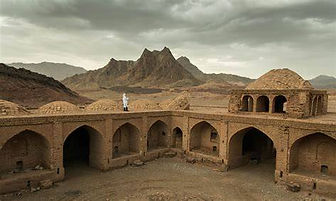
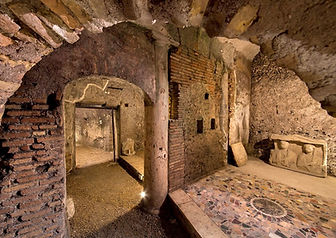
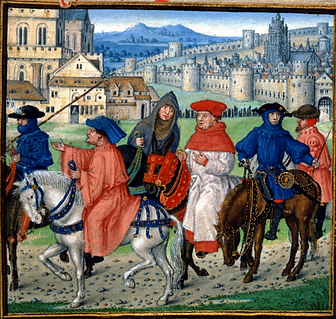
Caravanserais: Hubs of Trade and Rest
These establishments emerged about 2500 years ago, marking a significant milestone in accommodations for traders along the Silk Road. They were large courtyard inns designed to provide safety and comfort for caravans. They were fortified with food, stables for animals, space for social interactions and a place for cultural exchange.
Greece and Rome: The Birth of Western Hospitality
The ancient Greeks were known for their tradition of xenia, or hospitality towards travelers as a moral duty and sacred trust. During the Hellenistic period, travelers stayed in guesthouses and with local households. The Romans furthered this concept and built "mansiones" alongside their road networks, and they included basic amenities and baths.
The Middle Ages: The Rise of Inns and Taverns
Medieval Europe: The Role of Monasteries
In the Middle Ages, a major type of travel was religious pilgrimages and monasteries housed both pilgrims and travelers driven by the Christian ethic of hospitality. Monks and nuns would offer room, food and refuge often for little or no charge. These were the first to formalize welcoming travelers as an act of charity.
Development of Inns and Taverns
Inns and taverns sprang up along popular trade routes and within cities. These were run by laypeople and provided paid services, including food, board and even entertainment. People shared news, stories and conducted business.
The Origin of the Term "Hotel"
The word "hotel" originates form the French term hotel, which referred to a large town residence or mansion. By the 17th century, it began to describe establishments to provided lodging to travelers with specialized services and greater comfort.
The Renaissance and the Expansion of Hospitality
The Age of Exploration and Trade
In the 15th and 16th century, travel increased and wealthier travelers wanted luxurious accommodations. Cities like Venice, Paris and London became known for their high-end hotels that catered to affluent merchant class and nobility.
Coffeehouses and the Rise of the Grand Hotel
In the late 17th and 18th centuries, the rise of coffeehouses, especially in London and Vienna, provided a new social venue for traveler, and later these places paved the way for grand hotels.


The First Modern Hotels
The late 18th century saw the first modern hotels as we know them today. The Grand Hotel in London and Hotel de Richelieu in Paris were early examples that provided private rooms, dining and high quality service.
The 19th and Early 20th Centuries: The Gold Age of Hotels
The Industrial Revolution and the Hotel Boom
The Industrial Revolution of the 19th century marked a transformation with railroad and steamships taking people further away from home. Hotels emerged near railway stations for business and leisure travelers.


Iconic Grand Hotels
Famous establishments such a the Savoy Hotel in London, opened in 1889, the first to use electricity lighting and offer modern plumbing. The Waldorf Astoria in NYC, opened in 1893 and became the symbol of opulence and high society.
The 20th Century: Diversification and the Birth of Hotel Chains
Post War Expansion and Modern Amenities
After WWII, travel surged due to air travel and hotel chains emerged including Hilton, Marriott, and Holiday Inn that offered consistent experiences across different cities, and was more affordable for the middle class.
Boutique Hotels and Unique Experience
By the end of the 20th century, boutique hotels became popular which featured unique designs, personalized service and intimate atmosphere.
Hotel Evolution: Luxury and Sustainability
In the modern age, hotels are defining luxury with not opulent grandiose architecture but with unique and personalized services such as wellness and health focused spas, yoga classes and sustainable dining options. Hotels are also focused on energy-efficient practices and renewable green sources.


Nishiyama Onsen Keiunkan is not just the world's oldest hotel, but the world's oldest still-operating business. Or at least, that's one way of looking at it. But things are changing here, just like they always have. Of course back when it was founded more than a thousand years ago, it does not look like this.
The history of the Keiunkan inn dates back 1300 years to the year 705AD (the 2nd year of the Keiun era), when Fujiwara Mahito founded the inn. Because it was founded in the Keiun era, the inn was thus named Keiunkan. The hot spring has flowed freely without interruption since then and is loved by many townsfolk, military commanders and cultured peoples as a secluded place deep in the mountains of the Kai region. Even the Emperor of Japan has stayed here (with his 100 attendees) back in the 1970s.
Most recently, management of the hotel has been passed to an outsider of the family (after 52 generations!). The new president is the former general manager who has been working there for more than 25 years and he says, the most important thing is the focus on the service of the hot springs and change with the times.


The rise of hotels coincided with the rise of tourism—travel for leisure, instead of for migration or business. Historians trace the roots of modern tourism to the grand tours of the 17th and 18th centuries, in which young aristocrats would travel across Europe as a rite of passage. Review a typical grand tourist itinerary, then discuss with your team: in what sense does this tradition continue today?
The Grand Tour was the ultimate Georgian / Victorian gap year experience. Expensive and glamourous, this was a rite of passage for rich aristocratic young men (and later, women) who travelled Europe between the 17th and 19th century, broadening their minds with culture, art, music and architecture and having lots of fun along the way - drinking, gambling and of course falling in love.
"Grand Tour" came into the English vernacular around mid 1600s. This was one of the signature experiences associated with the British nobility and other young aristocrats from the neighboring European countries often partook in this coming of age cultural extravaganza, often at the age of 21. Many literary giants including Lord Byron and Percy Shelley found inspiration in the landscapes of France, Italy and Switzerland and later made a career out of their artistic skills.
These young men travelled with their tutors who served as unofficial chaperones and servants. They stayed for days or even months at hotels, touring the city and enjoying the local cultures. As a result, hotels and restaurants in cities such as Rome and Paris began catering to this affluent group of tourists.
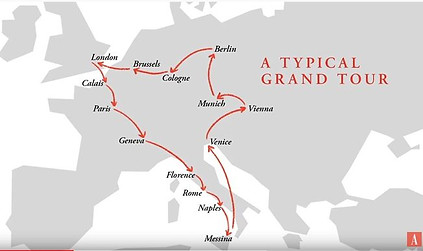
Traditionally, the trip began in England and after crossing the strait, they would start with Paris, Lyon, venture over the Alps to Italy and visit famous cities including Rome, Florence, Venice and Naples. Later tourists even visited Pompeii and Herculaneum for those interested in history or archeology. Some of them even ventured into German speaking parts of Europe to study in universities and further their academic studies. A final destination might have been Holland and Belgium, where they visited galleries and studied art. Along the way, they continued language courses and attended dances, sports such as riding and fencing. The social skills they honed later helped them enter into diplomatic service or government at home.
To serve this affluent group of tourists, local artists began painting landmark scenes to sell as souvenirs for the trip. One of them was Giovanni Antonio Canal, known as Canaletto, a member of the Venetian school who was famous for this cityscapes (vedute) of Venice and Rome. With the encouragement of Owen Swiny, an Irish art dealer, he painted small cityscapes (like ancient postcards) for the visitors to take home. One notable collector was Joseph Smith, British Consul, who sold his collection to King George III. These young men not only brought home artwork but also an appreciation for European art and architecture and fashion.
This became an inspiration for a new kind of elaborate dress for men called macaronis - men who indulged in fancy wigs, tight pants and more effeminate manner. This was the precursor to the "dandy" stereotype of later eras.
The practice of galivanting across Europe persisted until the French Revolution which made travelling across France and Italy too dangerous. Some went a different route and travelled to Germany and the Ottoman Empire. In the 1800s, women joined in and they traveled with a chaperone, usually an older aunt.
The advent of steam powered travel made travel more accessible and the middle class began to dominate the scene. This rite of passage for aristocrats began to fade, or rather evolved into a new type of travel. The Talented Mrs. Ripely?
Today, the legacy of the Grand Tour lives on in the stately homes of aristocrats, in the objects which adorn many a living room in English manors. I am imagining Pemberley Place from Pride and Prejudice.


Privileged young graduates of sixteenth-century Europe pioneered a trend wherein they traveled across the continent in search of art and cultural experiences upon their graduation. This practice, which grew to be wildly popular, became known as the Grand Tour, a term introduced by Richard Lassels in his 1670 book Voyage to Italy. Specialty guidebooks, tour guides, and other aspects of the tourist industry were developed during this time.
These young, classically-educated Tourists were affluent enough to fund multiple years abroad for themselves and they took full advantage of this. They carried letters of reference and introduction with them as they departed from southern England.
A typical journey through Europe was long and winding with many stops along the way. London was commonly used as a starting point and the Tour was usually kicked off with a difficult trip across the English Channel. The first leg kicks off often with seasickness, illness and even perhaps shipwreck.
Grand Tourists were primarily interested in visiting cities that were considered major centers of culture at the time, so Paris, Rome, and Venice were not to be missed. Paris, France was the most popular stop of the Grand Tour for its cultural, architectural, and political influence. It was also popular because most young British elites already spoke French, a prominent language in classical literature and other studies, and travel through and to this city was relatively easy.
Besides drinking, gambling, flirting, visiting French and Italian royalty as well as British diplomats was a common recreation during the Tour. The young men and women that participated wanted to return home with stories to tell and meeting famous or otherwise influential people made for great stories. And, most popular of all was shopping! They bought lots of art, antiques and homemade items back home to stock their estates.


While rich travelers usually rented an apartment, some also stayed in the homes of envoys and raided their food pantries as one of the perks of being a citizen. Nice apartments were available in large cities but harsh and dirty inns would have to do in smaller towns.
What about money?A grand tourist would not carry much money on their person during their expeditions due to the risk of highway robberies. Instead, letters of credit from reputable London banks were presented at major cities of the Grand Tour in order to make purchases. In this way, tourists spent a great deal of money abroad.
After they returned they were expected to grow up and assume their responsibilities with new found maturity fostered overseas in mainland Europe.
The grand tour was a privilege afforded mainly to the nobility and the wealthy. It took the emergence of the railway, the ocean liner, and the passenger jet, along with the rise of a middle class with enough disposable income, to bring tourism to the masses. Explore the history of leisure travel, then discuss with your team: why do certain places attract more tourists? Is it possible to attract too many?
Mass tourism occurs when large numbers of people visit the same place at any one time. This includes sunbathing on a beach, eg the Costa del Sol (Spain), skiing in the mountains such as the Swiss Alps, visiting a national park such as Loch Lomond and the Trossachs (Scotland), or travelling to a theme park, eg Disney World in Florida. Governments and local people often favour mass tourism as it generates a lot of income. Mass tourism is often the most popular form of tourism as it is usually the cheapest way to go on holiday by booking a package deal using the internet or through a travel agent.
Causes of/ reasons for mass tourism
-
Improvements in communications - road, rail and air travel.
-
Purpose built resorts, spas and holiday camps.
-
Increase in paid time off work, following the 1871 Bank Holiday Act.
-
Ability to finance time off work with holiday pay, following the 1938 Holidays with Pay Act.
-
More free time to travel and holiday at home and abroad.
-
Enhanced standard of living and more disposable income.
-
The impact of tour operators and travel agents making it easier to holiday abroad with package deals, which often include flights, transfers and meals.
-
Travel programmes on TV and social network sites encouraging people to visit different places.
-
Cheap package holidays and budget airlines making holidays more affordable to many people.
-
Attitudes to going abroad have changed as tour operators eliminate the stress by employing tour reps in the resorts.
-
Desire to experience different climates and guaranteed sunshine – away from the great Scottish summer.
-
Demand to explore different places of historical, cultural, religious or environmental interest.

.jpg)


Some people (and American politicians) long for the so-called “Golden Age of Travel”: an era of opulent ocean liners, spacious flying boats, and wealthy travelers dressed to impress. They contrast this glowing picture with the cramped seats on modern airplanes and images of barefooted passengers clipping their nails at 30,000 feet. Whether or not such a golden era ever existed—historians have their doubts (alternate link)—discuss with your team: what, if anything, should be done to improve the travel experience today? Be sure to consider the psychology behind tourist misbehavior: is there something about traveling that encourages people to act in ways they wouldn’t at home?
US Transportation Secretary Sean P. Duffy has launched a new 'civility campaign' titled 'The Golden Age of Travel Starts with You'. According to a U.S. Department of Transportation (DoT) statement, the campaign is intended to "jumpstart a nationwide conversation around how we can all restore courtesy and class to air travel." It added: "This won't just make the travel experience better for the flying public – it will ensure the safety of passengers, gate workers, flight attendants and pilots."


To back up its argument that air travel manners have flown out of the window, the Department of Transportation claimed that since 2019, the FAA has seen a 400 percent increase in in-flight outbursts, that there have been 13,800 unruly passenger incidents since 2021, and that unruly passenger reports rose by a factor of six between 2020 and 2021.
In response to the January 6 Capitol riots in January 2021 and associated chaos on DC flights – some rowdy protesters disrupted journeys by continuing to rally in the air as they flew home – along
with the rise in mask-rage incidents, FAA Administrator Steve Dickson signed the Zero Tolerance order. Historically, the agency has addressed unruly-passenger incidents using a variety of methods ranging from warnings and counseling to civil penalties. Under the new zero tolerance policy, FAA will not address these cases with warnings or counseling. The agency will pursue legal enforcement action against any passenger who assaults, threatens, intimidates, or interferes with airline crew members.

Since then, airlines have been encouraged to report every incident, which may have inflated the FAA statistics on unruly behavior. It can also be argued that "13,800 incidents since 2021" is fairly low when spread over four years and billions of passengers. And, other critics believe the statistic is sketchy at best and does not accurately reflect the issue.
There are thousands or maybe millions of these videos online: Passengers going nuts over spilled drinks or supposedly bad service; flight cancellations turning grown adults feral; tiny inconveniences disrupting the brittle peace of the temporary societies that exist in the air above us all the time. Sometimes, if you’re lucky, you’ll find a compilation, a clip show of modern misery. But, that was not always so. In the early 20th century, flying was a source of intense curiosity and great wonder; if anyone was melting down, it was probably because they were simply so dazzled by it all, or maybe very scared—not because someone used their armrest.
Early airplanes were used mostly for warcraft and mail carrying; occasionally, a passenger might come along for some reason or another, but they had to sit with the pilot in an open cockpit, exposed to whatever the weather was. Even once we figured out how to put more people inside planes, cabins weren’t pressurized, so they flew low and jiggled everyone around. Until 1930, there were no flight attendants, which I suppose means there was no one to scream at. Some engines were loud enough to cause permanent hearing damage.


After 1945, the era of mass air travel began, aviation having been “transformed by the war from a government-subsidized experiment into an economically sound transportation industry.” In the ’50s, airplanes overtook trains, and then ships, as America’s preferred means of long-distance transportation. This era is now widely considered to be commercial aviation’s golden age, when the technology was established enough to be comfortable, safe, and fast, but still novel enough to feel remarkable.
After that, it was downhill. Less leg room, more people, crowded transits, delays....After 9/11, security turned flight attendants into cops and passengers into would-be criminals. The airlines continued to cut costs, squooshing seats closer together and charging for just about everything they could: legroom, internet, checked bags, overhead space, food, even water, as Ester Bloom reported in 2015. “To travel by air,” Lenika Cruz wrote in 2022, “is to endure a million tiny indignities.”
Was flying such a glamorous thing back in the mid-1900s? Aimée Bratt, who, as a flight attendant with Pan Am in the mid-’60s, “was struck by ‘how crowded it was on an airplane, no place to put anything, lines for the lavatories, no place to sit or stand … Passengers got their food trays, there was no choice of meals, drinks were served from a hand tray, six at a time, pillows and blankets were overhead, and there were no extra amenities like headsets or hot towels.’”
From knocking over ancient rock formations in Nevada to miming lewd acts with a statue in Italy, stories of tourists behaving badly on holiday seem to be on the rise, and destinations around the world are taking notice.
In the last few months, there have been protests against overtourism and "bad" tourist behaviour around the globe, and both issues seem to be coming under greater scrutiny. Websites and Instagram accounts like Tourons Of Yellowstone and Welcome to Florence serve as repositories of questionable traveller behaviour, and with each new documented instance, many may wonder.
According to Javier Labourt, a licensed clinical psychotherapist and avid traveller, the answer is varied. "There are many factors that could influence this [kind of] behaviour," he says. "There could be individual factors, there could be contextual factors [and] there could be group factors, if the person is travelling with a group. So, I think that the first question that we need to ask to ourselves is, okay, is this person someone that would do this type of behaviour when he or she is at home?"
According to Dr Alana Dillette, Assistant Professor of Hospitality and Tourism Management at San Diego State University, some types of inappropriate tourist behaviour, such as trying to help an animal rejoin its herd at Yellowstone National Park, may come down to a general unawareness of social norms and what's acceptable in different destinations.
Another classic form of bad tourist behaviour is what behaviourist and author of the book On Being Unreasonable, Dr Kirsty Sedgman, who teaches at the University of Bristol, refers to as "main character energy". "It's not just that people are getting more


badly behaved," Sedgman explains. "It's that often when they're called out on those bad behaviours… it's much more likely now that people will [get angry]. That sense of 'don't tell me what to do' it's really strong." Labourt, however, feels that there may be deeper psychological issues at play. "[When travelling] we have to connect to the destination, to a new culture. This connection, it demands us to be in a different emotional position, and not everyone is ready for that."
The financial and psychological impact of bad tourism - Though much has been written about the environmental impact of overtourism, the impact of bad tourist behaviour – particularly vandalism – is something that's often overlooked in the voyeuristic retelling of bad tourist stories. The financial and psychological effects of these one-off instances, such as the destruction of sacred cave art in South Australia, are much harder to calculate. "Oftentimes the property owners and stewards of historic assets are already struggling to care for these resources. So, when a building is vandalised, it's adding an undue additional financial responsibility," Brent Leggs, Executive Director of the African American Cultural Heritage Action Fund added. For example in 2021 a visitor etched over 4,000-year-old petroglyphs with their name in Texas' Big Bend National Park, permanently destroying a site sacred to local Indigenous communities.
Governments across the globe are attempting to curb bad behaviour by instating harsher laws, creating official guidelines for behaviour and enacting hefty fines. From Amsterdam's "Stay-Away" campaign targeting drunk British visitors to Italy's barrage of new restrictions and fines aimed at limiting tourism and discouraging bad behaviour, destinations are coming up with new solutions to deal with the situation.


Although nothing beats a Jet2 Holiday, tourists are increasingly avoiding tours that shuffle everyone through the same overcrowded museums and restaurants in favor of more “authentic” travel experiences. Explore the following niche forms of travel and consider what role social media may have had in promoting them. How realistic is it to engage in deep exchange and learning while on holiday?

How China’s most popular lifestyle app leads — and misleads — young tourists. Writer Yuan Ye shared that last month, he decided to take a break from his life in big-city China and take a trip to South Korea. Tired of overcrowded tourist traps and desperate to find something different, he turned to Xiaohongshu, a Chinese lifestyle platform often described as China’s Instagram, for travel advice. One of the search results stood out: Pyeongsan Bookstore, a rural shop opened by former Korean president Moon Jae-in in his hometown in 2023. But when he hopped into a taxi and told the driver said, “Ah, Moon’s bookstore...Many Chinese go there.”
He learned how wrong he was. There was a large group of people milling outside, many of them speaking Chinese. Throughout his one-month stay in South Korea, he had encountered few Chinese travelers. But here, in a tiny village over 23 kilometers from the southern city of Busan, it seemed there were more Chinese visitors than locals.

Ye notes it was his first experience of Xiaohongshu-driven daka tourism in Korea. The term, which literally means to “check in,” has entered widespread use in China as young travelers, tired of tour groups and packed scenic sites, turn to social media in search of more unique destinations. In Korea, the Pyeongsan Bookstore is a controversial political flashpoint. But on Xiaohongshu, it’s a hip spot off the beaten track — and a place where, if you’re lucky, you might be able to snap a selfie with the former Korean president.

This group of social media travelers has markedly different interests and ideas about what constitutes a good trip from previous generations. Instead of tour buses and tightly planned itineraries, young Chinese consumers are more willing to spend on travel “experiences,” with a focus on laid-back schedules and budget-conscious destinations. According to marketing agency Finn Partners, 80% Chinese travelers now prefer to pay for experiences over tangible products. Other travelers like to meet new friends and also find ways to split the expenses, seeing the world more interestingly and cheaply.
But, Xiaohongshu's success is also its downfall. When an off the beaten path place becomes too popular on a platform with 300 million users, it becomes as "destination", flooded with social media tourists, checking in and posting - starting a vicious cycle. Initially it would be a boom for local businesses, but as the posts become too similar "same photos over and over again", people become tired of seeing the same place.


Xiaohongshu after all is not like the Lonely Planet which is a product of professional travelers. Traveling in search of something different from the typical path has evolved. Japan's tourism boom was described by anthropologist Erve Chambers in his book “Native Tours." “The patterns of consumption for the Japanese involve turning inward to make the familiar exotic rather than turning outward for these experiences,” Chambers writes. Although Chambers was writing about Japanese tourists in the 1990s, he could just as easily have been describing the Xiaohongshu tourists traveling the world in order to recreate the world as seen on their phone screens. So, while Xiaohongshu and other travel apps make researching more accessible, the best trips are often those unexpected and less planned ones not shared and posted by others.
heritage tourism
Heritage tourism is travel aimed at exploring and experiencing the historical, cultural, and natural heritage of a place. Heritage tourism involves visiting locations, artifacts, and cultural practices that authentically represent the history and traditions of a community. Unlike conventional tourism, which often focuses on leisure or entertainment, heritage tourism emphasizes learning, cultural appreciation, and meaningful engagement with the past and present of a destination. Travelers may explore historical sites, museums, architectural landmarks, natural landscapes, or participate in local customs and festivals to gain insight into a region’s heritage.

Visitors seek genuine representations of culture and history rather than commercialized or artificial experiences. Heritage tourism encourages learning about historical events, cultural practices, and natural environments. It often supports the conservation of historical sites, traditions, and cultural practices. Heritage tourism not only enriches travelers’ understanding of history and culture but also contributes to economic development and sustainability in the regions visited. It helps preserve cultural and historical resources while fostering pride and engagement within local communities.
ecotourism
Ecotourism is responsible, sustainable travel that conserves the environment, supports local communities, and educates visitors, whereas traditional tourism primarily focuses on leisure, entertainment, and sightseeing without necessarily considering ecological or social impacts. Traditional tourism is mainly designed for entertainment, relaxation, and sightseeing, with the destination serving as a backdrop for leisure activities. Success is measured by visitor satisfaction and repeat bookings. Ecotourism, in contrast, emphasizes responsible travel to natural areas, aiming to conserve ecosystems, support local communities, and provide educational experiences about the environment and culture. Ecotourism is about leaving the environment better than it was before the travelers came.

Ecotourists tend to travel in smaller groups, stay longer, and choose locally operated accommodations to reduce environmental impact and engage more deeply with the destination. Traditional tourists often prefer luxury hotels, all-inclusive packages, and large group tours, which can contribute to overcrowding and resource strain.
Through local charities and WildCina, a sustainable travel agency, my family has been involved in ecotourism with a local village in Yunnan called Qielongzhongzhai for several years. (www.intotheterraces.com - it's a work in progress.) We treat it like our home away from home, taking time to understand the village's challenges, documenting their everyday lives, learn about cultural and environmental preservation, participating in workshops with local villagers in regards to their climate change issues. It's been one of the most rewarding experiences of my life.


gastrotourism
The Committee on Tourism and Competitiveness (CTC) of UN Tourism defines Gastronomy Tourism as a type of tourism activity which is characterized by the visitor's experience linked with food and related products and activities while travelling. Gastro-tourists are foodies, seek authentic experiences such as visiting local markets, dining at renowned or family-owned restaurants, attending food festivals, participating in cooking classes, and engaging with chefs or food producers. Food serves as a gateway to understanding local traditions, history, and social customs, allowing travelers to connect deeply with the community. Gastro-tourists often pursue hands-on activities like learning traditional cooking techniques or tasting rare regional dishes, providing a genuine glimpse into daily life.
.jpg)

-
Sampling street food in Bangkok or Hanoi or night market in Taipei
-
Wine tasting in Bordeaux or Napa Valley or even New Zealand
-
Cooking classes in Tuscany or Japan
-
Visiting local farms, breweries, or artisan food producers


Agritourism
Agritourism is a form of tourism that allows visitors to experience working farms, ranches, or agricultural operations through hands-on, educational, or recreational activities. Agritourism blends agriculture and tourism, offering travelers the chance to engage directly with rural life and food production rather than just observing from a distance. It can include activities such as farm tours, picking your own produce, caring for animals, participating in harvests, attending workshops on cheese making or beekeeping, and even staying overnight in farm accommodations. Essentially, any farm-related activity that entertains, educates, or immerses visitors in agricultural practices qualifies as agritourism.
Visitors actively participate in farm or ranch activities, such as milking cows, planting crops, or tapping maple tree. Guests learn about sustainable farming, food production, and local agricultural traditions. Agritourism provides additional income for farmers, diversifies revenue streams, and supports rural economies by attracting visitors to local communities. There is a wide variety of learning skills like cheese making, beekeeping, or flower arranging.


Monastic Retreats
A monastic retreat is an immersive experience in or near a monastery, designed to foster spiritual growth, introspection, and inner peace through silence, structured routines, and contemplative practices. These retreats allow participants to step away from the distractions of daily life and experience the calm, structured environment of monastic living. They are often set in serene natural surroundings to enhance reflection and connection with the environment. Extended periods of silence are central, helping participants quiet their minds and focus inward. Retreats typically follow a daily routine that may include meditation, prayer, mindful walking, and communal or solitary reflection. Participants may engage in practices such as Lectio Divina (praying with sacred texts), chanting, or other contemplative exercises. Accommodations, meals, and activities are often minimalistic to encourage detachment from material distractions.
Do Shaolin Temple Kung Fu tours qualify?
Voluntourism
Voluntourism is a form of travel that combines tourism with hands-on volunteering, allowing travelers to contribute to communities or environmental projects while exploring a destination. Voluntourism blends travel with volunteer work, giving participants the opportunity to serve host communities or environments through projects in education, healthcare, conservation, or community development. Unlike traditional tourism, which focuses on leisure and sightseeing, voluntourism foregrounds service, often involving short-term commitments where travelers pay to participate in meaningful activities. Examples include teaching children, building community infrastructure, assisting in healthcare, or participating in environmental conservation efforts.
While ecotourism emphasizes low-impact travel, environmental education, and sustainable practices, voluntourism prioritizes direct service to people or communities, though eco-related projects may also be included. Volunteering alone can occur anywhere, but voluntourism specifically involves travel to a volunteer site, often abroad, combining cultural immersion with service.
The global voluntourism market is growing rapidly, valued at approximately USD 848.9 million in 2023 and projected to reach USD 1,273.3 million by 2030, driven largely by younger travelers seeking meaningful experiences. Participants are often millennials and Gen Z, who make up a significant portion of voluntourists. Voluntourism can be transformative, but it carries ethical complexities. Poorly designed programs may prioritize volunteer satisfaction over community needs, sometimes causing unintended harm, such as displacing local workers or creating dependency.

.jpg)
.jpg)
Edutourism
Countries like the United States, United Kingdom, Germany, France, Australia, and Japan are well-known for offering structured edutourism programs, including university courses, cultural workshops, and eco-tourism experiences. Programs can range from short-term workshops to multi-month study or volunteer experiences. The issues and challenges include collaborative agreement between university and travel agency, monetary issues, administrative issue etc.
In many countries such as China, travel+education has become a mandatory program in public and private schools. It not only engages the students to explore culture and understand local communities, it also boosts the local economy and help raise awareness of environmental, economic, or social issues. However, costly and short-term programs that are mainly recreation loses the education component and might just be another tourist trap.
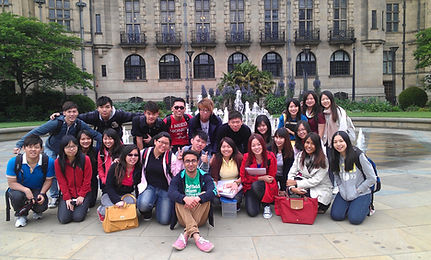

Edutourism, or educational tourism, is travel primarily aimed at learning, cultural exchange, and personal growth, combining education with leisure experiences. It can include academic learning, language acquisition, cultural immersion, environmental awareness, or professional development. The purpose is to broaden perspectives, foster personal growth, and enhance global awareness while exploring new destinations. Common programs include: language programs, study abroad, student exchange, networking experiences, and vocational training.
Wellness retreats
Wellness tourism focuses on improving mental and physical health through retreats that offer relaxation, rejuvenation, and various holistic activities. This can include a variety of activities such as yoga, meditation, spa treatments, and nature immersion. The goal is to enhance one's physical, mental, and emotional health while enjoying a peaceful environment.
These often include massages, facials, and other spa treatments designed to relax and rejuvenate guests. Focused on yoga practice, these retreats often include daily classes, meditation sessions, and healthy meals. They can be found in serene locations that enhance the experience, such as coastal areas or countryside settings. Some retreats offer structured programs that include detox diets, fitness activities, and wellness workshops. These are aimed at helping participants reset their health and lifestyle.
dark tourism
Dark tourism, also known as thanatourism, involves visiting sites associated with death, disaster, and suffering. This form of tourism can encompass a variety of locations, including battlefields, prisons, graveyards, concentration camps, and museums dedicated to tragic events. Visitors are often drawn to dark tourism sites for their historical significance, educational value, or reflective experience, rather than mere morbid curiosity. Some tourists seek to understand human suffering, learn from past tragedies, or pay respects, while others may be motivated by fascination with the macabre. The concept of a "dark tourism spectrum" helps categorize activities from extreme, educational experiences—like visiting Auschwitz or the Chernobyl exclusion zone—to lighter, entertainment-oriented attractions such as the London Dungeons.
Dark tourism raises ethical questions about respect, voyeurism, and commercialization. Critics argue that some visitors treat tragic sites as entertainment, taking selfies or behaving insensitively, while proponents emphasize educational engagement and remembrance. Responsible dark tourism encourages sober, respectful, and informed visits, avoiding sensationalism or exploitation of suffering.
-
Auschwitz-Birkenau, Poland – Holocaust memorial and museum
-
Chernobyl, Ukraine – Nuclear disaster exclusion zone
-
Ground Zero, USA – Site of the September 11 attacks
-
Alcatraz, USA – Notorious former prison with historical tours
-
Pompeii, Italy – Ancient city destroyed by volcanic eruption
-
Tower of London, UK – Historic site with executions and torture chambers
-
Nanjing - Massacre Museum with heart-wrenching waterfall installation
-
Titanic sinking - One famous billionaire died in the submersible in 2023


People aren’t the only things that travel, of course; goods do too. Before the era of long-distance shipping, a trader who didn’t want to confront the full length of a trade road might transport his goods to or from an entrepôt. These bustling market towns were not destinations but waystations where goods were imported, stored, and traded again without being subject to local duties. Learn more about the terms and places below as you explore the history of getting goods from here to there to an Amazon Prime truck.
Entrepôts are trading hubs or ports where goods are imported, stored, and often re-exported, historically serving as central points in global trade networks. As a port, city, or trading post, it was where merchandise can be imported, stored, or traded, usually with the intention of exporting it again. The term comes from the French word entrepôt, meaning "warehouse," derived from Latin roots inter ("between") and positum ("position"), literally "that which is placed between". In modern French, it also simply means "warehouse".
Entrepôts had an important role in the early modern period, when mercantile shipping flourished between Europe and its colonial empires in the Americas and Asia. Traders often did not want to travel the whole route, and thus used entrepôts along the way to sell their goods. This could conceivably lead to more attractive profits for those who were suited to traveling the entire route.
However, modern logistics, supply chain networks, and border controls have largely made entrepôts obsolete, or reduced them in number, but the term is still used to refer to duty-free ports or those with a high volume of re-export trade.
entrepôts
.jpg)


Many major 17th century entrepots, like the city of Antwerp, Belgium, continue to be major centers of transshipment and trade into the 21st century. Other entrepots further down the trade hierarchy, for example Buffalo, New York, have suffered as technology has shifted trade routes and reduced the need for transshipment through a particular route. In the case of Buffalo this was partly caused by the obsolescence of the Erie Canal by newer technologies and routes.
waystations
A waystation is a stop or intermediate location along a journey where travelers can rest, refresh, or receive temporary assistance. They are usually set between main stations or destinations along a route, designed to provide travelers with a place to rest, eat, or resupply during long journeys. Historically,
waystations were essential for horse-drawn carriages, caravans, and early railroads, offering food, lodging, and water for both people and animals. In modern contexts, they can include rest stops for drivers, shelters for temporary accommodation, or logistics points for goods in transit. Waystations have existed in many cultures, often along pilgrimage routes, trade paths, or canals, serving as hubs of hospitality and community. For example, a "hydreuma" in ancient caravan routes was a fortified watering hole acting as a waystation.
Waystations are not just for human travelers. Monarch Waystations are places that provide resources necessary for monarchs to produce successive generations and sustain their migration. Without milkweeds throughout their spring and summer breeding areas in North America, monarchs would not be able to produce the successive generations that culminate in the migration each fall.


free trade zones
A free trade zone (FTZ) is a designated area where goods can be imported, stored, manufactured, or re-exported without being subjected to duties or taxes., These zones facilitate trade by providing duty-free areas that allow for warehousing, storage, and are often located near ports or airports.
The world's first-documented free-trade zone was established on the Greek Island of Delos in 166 BCE. It lasted until about 69 BCE when the island was overrun by pirates. The Romans had many civitas libera, or free cities, some of which could coin money, establish their own laws, and not pay an annual tribute to the Roman Emperor.

These continued through at least the first millennium CE. In the 12th century, the Hanseatic League began operating in Northern Europe and established trading colonies throughout Europe. These Free Trade Zones included Hamburg and the Steelyard in London. The Steelyard, like other Hansa stations, was a separate walled community with its own warehouses, weighing house, chapel, counting houses, and residential quarters.
Shannon, Ireland (Shannon Free Zone), established in 1959, has claimed to be the first "modern" free trade zone. The Shannon Zone was started to help the city airport adjust to a radical change in aircraft technology that permitted longer range aircraft to skip previously required refueling stops in Shannon. It was an attempt by the Irish government to maintain employment around the airport so that the airport would continue to generate revenue for the Irish economy. It was hugely successful and is still in operation today.
Other free zones to note are the Kandla Free Zone in India, which started in about 1960, and the Kaohsiung Export Processing Zone in Taiwan, which started in 1967. There are numerous free-trade zones in the world and many are used to boost the local and national economy.


transshipment
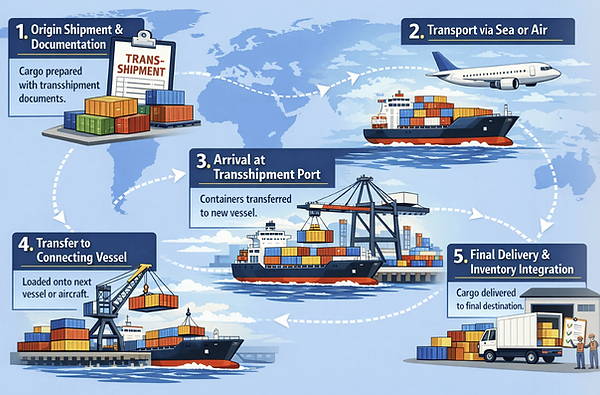
Transshipment is the process of transferring goods from one mode of transport or vessel to another at an intermediate location before reaching their final destination. This process is common in international shipping when direct routes are unavailable, impractical, or too costly. It allows for consolidation of smaller shipments into larger ones or deconsolidation of large shipments into smaller portions for multiple destinations. Transshipment can also involve a change in transport mode, such as from ship to truck or rail, often referred to as transloading.

caravanserai
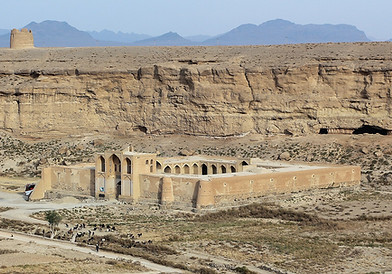
A caravanserai was an inn that provided lodging for travelers, merchants, and caravans. They were present throughout much of the Islamic world. Depending on the region and period, they were called by a variety of names including khan, funduq and wikala. Caravanserais supported the flow of commerce, information, and people across the network of trade routes covering Asia, North Africa and Southeast Europe, most notably the Silk Road. In the countryside, they were typically built at intervals equivalent to a day's journey along important roads, where they served as a kind of staging post.
In the Islamic period (seventh century and after), the use of caravanserais intensified. Their development at this time is linked to the shift from wheeled vehicles to camels and caravans for long-distance travel. The oldest identified example of an Islamic caravanserai is a courtyard structure at Qasr al-Hayr al-Sharqi, an Umayyad complex from the early 8th century located in the middle of the desert in present-day Syria.
Urban versions of caravanserais were historically common in cities, where they could serve as inns, depots, and venues for conducting business. Urban versions of caravanserais also became important centers of economic activity in cities across the Muslim world, often concentrated near the main bazaar areas, with many examples still standing in the historic areas of Damascus, Aleppo, Cairo, Istanbul and Fes. In the Indian subcontinent, caravanserais are found along the historic trade route known as the Grand Trunk Road.
.jpg)

Silk Road
The Silk Road was a network of Asian trade routes active from the second century BCE until the mid-15th century. Spanning over 6,400 km (4,000 mi) on land, it played a central role in facilitating economic, cultural, political, and religious interactions between the Eastern and Western worlds. The name "Silk Road" was coined in the late 19th century, but some 20th- and 21st-century historians instead prefer the term Silk Routes, on the grounds that it more accurately describes the intricate web of land and sea routes that connected Europe and many civilizations along the way.


.jpg)
The network began with the expansion of the Han dynasty (202 BCE – 220 CE) into Central Asia around 114 BCE, through the missions and explorations of the Chinese imperial envoy Zhang Qian, which brought the region under unified control. The Chinese took great interest in the security of their trade products, and extended the Great Wall of China to ensure the protection of the trade route. The Parthian Empire provided a vital bridge connecting the network to the Mediterranean. Meanwhile, the rise of the Roman Empire in the west further established the western terminus of the interconnected trade system. By the first century CE, Chinese silk was widely sought after in Rome, Egypt, and Greece. Other lucrative commodities from the East included tea, dyes, perfumes, and porcelain; among Western exports were horses, camels, honey, wine, and gold. Aside from generating substantial wealth for emerging mercantile classes, the proliferation of goods such as paper and gunpowder greatly affected the trajectory of political history in several theatres in Eurasia and beyond. Goods, technology, inventions, culture, religion and even disease spread via the Silk Road. It was a much more complex network of routes, trading and commercial customs than we imagine today.
Today, China continue the theme of the Silk Road but with new goods and assets, under the “One Belt and One Road” initiative launched by President Xi. It seeks to expand China's influence through overland and marine path that link China with the Middle East, Europe and Africa for valuable natural resources.
Piraeus
Piraeus was the ancient port of Athens and, at its height in the 5th century BCE, became the most important trading center in the Mediterranean. Its strategic location on the Saronic Gulf, just 7 km southwest of Athens, combined with natural harbors and later fortifications like the Long Walls, made it the hub for both naval power and commercial activity. Greek city-states, especially Athens, could not produce enough grain or raw materials to sustain their populations. This dependency on maritime trade drove the development of Mediterranean trade networks linking the Aegean with the Black Sea, Egypt, Anatolia, and the western Mediterranean. Piraeus was a key node in this system, handling imports of grain, timber, metals, and other goods, and exports of olive oil, wine, pottery, and manufactured products.
Piraeus was not just a harbor but a vast commercial complex:
-
Kantharos – the largest harbor, dedicated to commercial shipping.
-
Zea and Munichia – smaller harbors for the Athenian navy.
-
Ship sheds (neosoikoi) – hundreds of wooden structures to store and maintain trireme warships, also used for light maintenance and storage.
-
Warehouses, banks, offices, and shops – supporting the port’s bustling trade economy
The port handled a wide range of goods. Imports, especially from Egypt and the Black Sea, included timber, metals, textiles, and luxury items. Exports included olive oil, wine, figs, pottery (Attic and Corinthian wares), and other manufactured goods. By concentrating Athens’ import and transit trade in one location, Piraeus became a clearinghouse for Mediterranean commerce. Merchants from across the Greek world and beyond met there, making it a place where goods from Egypt, Asia Minor, and the western Mediterranean could be exchanged. Its role in the Athenian navy also meant it could protect and control trade routes, securing Athens’ economic and political dominance.


Tyrus
Tyrus, was one of the most important and prosperous Phoenician city-states in the ancient Mediterranean, renowned as a major hub of maritime trade and commerce. Tyre was situated on the eastern Mediterranean coast of what is now Lebanon, about 80 km south of Beirut. Originally a mainland settlement, it expanded to include an island city, which became its fortified and wealthiest part. The city’s name comes from the Phoenician word S'r, meaning “rock,” referring to its rocky islet. Its two ports — the Sidonian port to the north and the Egyptian port to the south — facilitated extensive trade with Egypt, the Levant, and beyond.

Tyre’s strategic position and strong fortifications made it a powerful commercial center. It was famous for purple dye production — Tyrian purple, a highly prized and expensive dye, was a major export. It was also a hub for skilled artisans and sailors — Known for high-quality craftsmanship and navigation expertise.

Lothal
Lothal was one of the southernmost sites of the ancient Indus Valley civilisation, located in the Bhat region of the Indian state of Gujarat. Construction of the city is believed to have begun around 2300 BCE, during the early Indus Valley civilization. Lothal was an important trade centre in ancient times, with its trade of beads, gems and valuable ornaments reaching the far corners of West Asia and Africa. The techniques and tools they pioneered for bead-making and in metallurgy have stood the test of time for over 4,000 years.

According to the ASI, Lothal may have had one of the world's earliest known dock, which connected the city to an ancient course of the Sabarmati River on the trade route. This trade route stretched between Harappan cities in Sindh and the Kathiawar Peninsula where the surrounding Kutch desert of today was a part of the Arabian Sea.
After the core of the Indus civilisation had decayed in Mohenjo-daro and Harappa, Lothal seems not only to have survived but to have thrived for many years. Throughout their time, the city had to brace itself through multiple floods and storms. Dock and city peripheral walls were maintained efficiently. The town's zealous rebuilding ensured the growth and prosperity of the trade. However, with rising prosperity, Lothal's people failed to upkeep their walls and dock facilities, possibly as a result of over-confidence in their systems. Its constant threats – tropical storms and floods – caused immense destruction, which destabilised the culture and ultimately caused its end.


Carthage
Ancient Carthage traded a wide variety of goods including metals, agricultural products, slaves, luxury items, and exotic resources across the Mediterranean and beyond. Carthage’s strategic location on a peninsula with natural harbors allowed it to dominate western Mediterranean trade, connecting North Africa, the Iberian Peninsula, Sicily, Sardinia, Corsica, Malta, and other islands. Carthaginian merchants also sailed to Britain for tin, down the Atlantic coast of Africa, and across the Sahara via caravan routes to access sub-Saharan gold and ivory.

Carthage’s trade empire made it one of the richest cities in the ancient world, enabling the city to establish colonies, protect trade monopolies, and export both locally produced and imported goods. Their mercantile expertise allowed them to sell a wide range of products to diverse markets, contributing to their wealth and influence in the Mediterranean economy.

.jpg)
Shimoda & Hakodate
The Convention of Kanagawa, also known as the Kanagawa Treaty (神奈川条約, Kanagawa Jōyaku) or the Japan–US Treaty of Peace and Amity (日米和親条約, Nichibei Washin Jōyaku), was a treaty signed between the United States and the Tokugawa Shogunate on March 31, 1854. Signed under threat of force, it effectively meant the end of Japan's 220-year-old policy of national seclusion (sakoku) by opening the ports of Shimoda and Hakodate to American vessels. It also ensured the safety of American castaways and established the position of an American consul in Japan. The treaty precipitated the signing of similar treaties establishing diplomatic relations with other Western powers.
Prior to this, Japan was a closed and isolationist country with minimal contact with Europeans. Commodore Matthew Calbraith Perry, representing the U.S.
government signs the Treaty of Kanagawa with the Japanese government, opening the ports of Shimoda and Hakodate to American trade and permitting the establishment of a U.S. consulate in Japan. In July 1853, Commodore Perry sailed into Tokyo Bay with a squadron of four U.S. vessels. For a time, Japanese officials refused to speak with Perry, but eventually they accepted letters from U.S. President Millard Fillmore, making the United States the first Western nation to establish relations with Japan since it was declared closed to foreigners in 1683.
While both cities were opened simultaneously, they played distinct roles in the decades that followed.
Shimoda: The Diplomatic Heart. Situated on the Izu Peninsula near the capital, Shimoda became the focal point for early diplomatic activity. Townsend Harris, the first American Consul-General, arrived in 1856 to negotiate more extensive commercial treaties. Shimoda also witnessed a dramatic natural disaster. On December 23, 1854, the Ansei-Tokai earthquake and a massive tsunami struck the city, destroying it and sinking the Russian frigate Diana during Vice-Admiral Putyatin's mission. The Russian sailors and Japanese carpenters cooperated to build a new schooner, the Heda, which became one of the first western-style ships built in Japan and a symbolic step toward its future naval modernization.
Hakodate: The Gateway to the North. Located in southern Hokkaido (then known as Yezo), Hakodate's significance was more strategic. It was a crucial "much needed refuge for whalers" and for provisioning ships in the northern Pacific. Its opening was instrumental in integrating the northern island into the country's broader political and economic framework.
Malacca
Malacca was founded around 1400 by Paramesvara, a Sumatran prince. Its rapid rise to prominence was driven by two key factors strategic location and diplomacy and trade. Its position on a fine natural harbor, commanding the main sea route between East and West, was its primary advantage. The sultanate also maintained a stable government and a policy of free trade, attracting a huge volume of international shipping. The ruler established tributary relations with Ming China, a powerful and wealthy empire, and embraced Islam, which attracted Muslim merchants from India, the Arab world, and Persia. This created a confluence of the world's major trading systems.


By the mid-15th century, Malacca was Asia's preeminent commercial hub. At its peak in the late 1400s, the city hosted some 15,000 merchants from various nations, and its harbor was said to hold more ships than any other port in the known world. This incredible diversity was reflected in the city's governance, which appointed four separate shabunders (port officials) to oversee the trade of distinct regions: the Malay Archipelago, China, and western and southeastern India. The
port's cosmopolitan nature was also highlighted by Chinese admiral Zheng He, who docked there five times during his famous voyages in the early 15th century.
Portuguese Conquest (1511): The Portuguese, seeking a base in Southeast Asia to control the spice trade, captured Malacca in 1511. While they maintained it as a crucial link in their vast trading empire, the city's prosperity declined due to their high taxes and intolerance of Islam, which drove many merchants away.
Dutch and British Rule (1641-1824): The Dutch captured Malacca in 1641. However, they too failed to fully revive its former glory, focusing their efforts on their new regional headquarters at Batavia (modern Jakarta). Malacca's role as the region's primary hub was further diminished by the rise of British Penang (1786) and, most decisively, the founding of Singapore (1819) at the southern end of the strait. In 1824, the British formally acquired Malacca from the Dutch, incorporating it into their Straits Settlements, but it never regained its former status.
Istanbul
Istanbul’s long history as a trading city is rooted in its unique position at the crossroads of Europe and Asia, straddling the Bosporus and controlling access between the Black Sea and the Mediterranean. Under Roman rule, it flourished as a commercial center, and by the 4th century AD, it was renamed Constantinople and became the capital of the Roman and later Byzantine Empires. As the capital of the Byzantine Empire, Constantinople was one of the largest and wealthiest cities in the world, with a population peaking at nearly half a million. It was a central node in the Silk Road and Mediterranean trade networks, handling goods from Asia, Africa, and Europe. The city’s ports, especially on the European side, were vital for importing luxury goods like silk, spices, and precious stones, and exporting wine, olive oil, and manufactured goods.
After the Ottoman conquest in 1453, Istanbul inherited Byzantine trade infrastructure and expanded its role as the empire’s commercial heart. The Grand Bazaar, built in the 15th century, became one of the largest and most important markets in the world, facilitating trade between the East and West. Goods from the Silk Road, the Indian Ocean trade routes, and the Mediterranean converged here, while the city’s ports handled imports from across the empire and the world.


.jpg)

Chicago
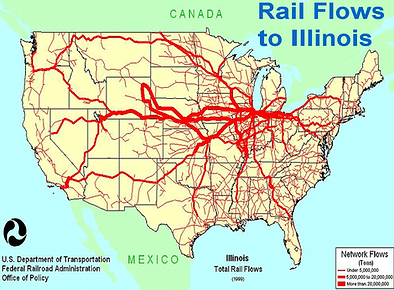
Chicago’s journey from a small frontier settlement to a global trading powerhouse began in the late 18th century. Jean Baptiste Point du Sable, a merchant of mixed African and French descent, recognized the business potential of the Chicago area and established a fur-trading post in 1779 in cooperation with the Potawatomi people. By the 1820s, Chicago had become the most successful trading area on Lake Michigan, serving as a portage point for fur traders moving goods between the Great Lakes and the Mississippi River basin.
The city’s strategic location at the confluence of the Chicago River and Lake Michigan made it a key link between the Great Lakes and the Mississippi River system. The Illinois and Michigan Canal, completed in 1848, transformed Chicago into a major inland port by creating a continuous waterway from the Atlantic Ocean to the Gulf of Mexico via the Great Lakes and Mississippi River system.
The turning point came in 1848 with the founding of the Chicago Board of Trade (CBOT), the world’s first organized futures and options exchange.
By the mid-19th century, Chicago’s trade routes were increasingly dominated by railroads, which complemented and eventually surpassed canal transport. By 1856, the city was served by ten main railroad lines, with over 100 trains operating daily, linking Chicago to regional and national markets. This network allowed manufactured goods, agricultural products, and raw materials to flow efficiently, establishing Chicago as the busiest inland port in the United States.

.jpg)

Hong Kong